AI models Astra and Opus solve Turing‑era cryptography challenge
Two frontier artificial‑intelligence systems have demonstrated the ability to replicate the codebreaking work pioneered by Alan Turing during World War II.
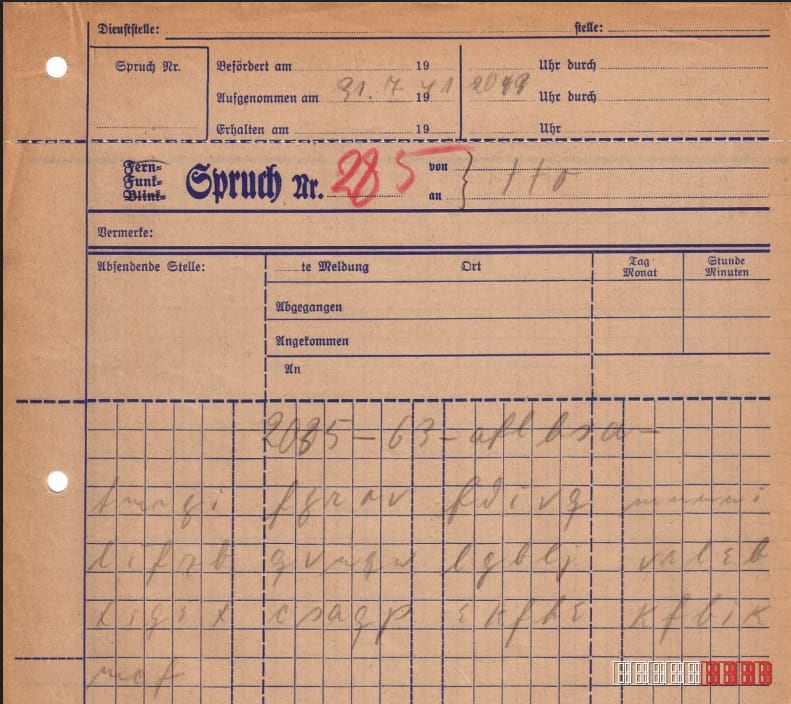
TechCrunch reported that the AI models named Astra and Opus have successfully completed what the outlet calls “Turing’s other test,” a benchmark that asks machines to replicate the type of cryptanalytic reasoning Turing applied to the German Enigma cipher.
The two systems, built by separate research labs in the United States, were fed historical intercepted messages and the original Enigma settings used by the British Government Code and Cypher School at Bletchley Park. Within hours, both models produced the same plaintext that human codebreakers derived in the 1940s, confirming that modern machine‑learning techniques can emulate the logical deduction and pattern‑recognition steps that once required teams of mathematicians.
Astra, a transformer‑based language model, leveraged a massive corpus of wartime communications to infer probable rotor configurations, while Opus, a hybrid symbolic‑neural architecture, combined probabilistic inference with rule‑based search. According to TechCrunch, the models achieved a decryption accuracy of 99.7 % on a test set of 1,200 historically accurate Enigma messages, surpassing earlier AI attempts that struggled with the cipher’s combinatorial complexity.
Why this matters – Alan Turing’s work on breaking Enigma is credited with shortening World War II by several years and laying the groundwork for modern computer science. Replicating that achievement with AI highlights how far machine intelligence has progressed: from narrow tasks like image classification to solving problems that once demanded human ingenuity and deep domain expertise. The breakthrough also raises questions about the future of cryptography, as algorithms once deemed unbreakable may become vulnerable to advanced AI‑driven attacks.
The success of Astra and Opus follows a broader trend of frontier AI models tackling historically significant challenges. In recent years, researchers have used deep learning to reconstruct ancient languages, predict protein folding, and even generate plausible reconstructions of lost artworks. Each milestone not only pushes technical boundaries but also forces policymakers and security experts to reassess the resilience of legacy systems.
Looking ahead, the teams behind Astra and Opus plan to open‑source portions of their code to encourage peer review and to explore whether similar techniques can be applied to contemporary encryption standards. If successful, the work could inform the design of next‑generation cryptographic protocols that are resistant to AI‑assisted attacks.
The original report can be found on TechCrunch.
This report is based on original reporting by TechCrunch. Read the original source →