Apple unveils tool to verify iPhone photo authenticity
The new Apple Reference Image feature lets users prove a picture hasn't been altered by AI or other editing software.
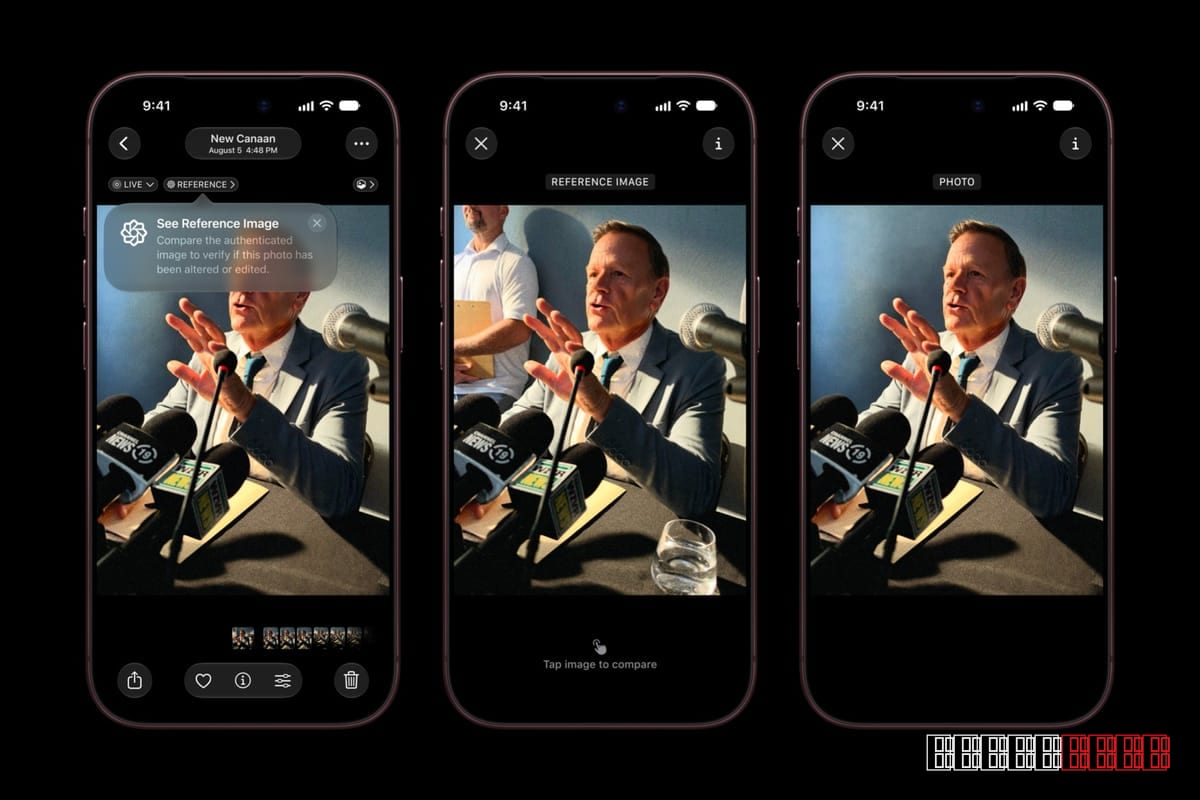
Apple has added a new capability to iOS called Apple Reference Image, designed to let iPhone owners demonstrate that a photo is exactly what the camera captured, without any post‑capture manipulation. TechCrunch reported that the feature embeds a cryptographic reference within the image file, enabling on‑device checks that can confirm whether the picture has been edited, including alterations made by generative‑AI tools.
When a user takes a shot, the camera system creates a hidden reference that records the raw sensor data and the processing pipeline applied at the moment of capture. If the image is later opened in the Photos app, the system can compare the current file against that reference. A mismatch triggers a warning that the picture may have been altered, while a match displays a badge indicating the image is “unaltered.” The verification runs entirely on the device, preserving user privacy while providing a tamper‑evidence stamp.
The rollout comes amid growing concerns over AI‑generated imagery flooding social media and news feeds. Deep‑learning models can now produce photorealistic pictures that are difficult for the human eye to distinguish from genuine captures. For journalists, law‑enforcement agencies, and everyday users, the ability to authenticate a visual record is becoming as critical as verifying textual sources. Apple’s move reflects a broader industry push to embed provenance tools directly into consumer hardware.
Apple has a history of bolstering the integrity of its media ecosystem. Earlier versions of iOS introduced signed Live Photos and Secure Enclave‑backed metadata to protect against unauthorized tampering. The new Reference Image builds on that foundation, extending verification beyond video and live captures to still images, and explicitly addressing the rise of AI‑based editing apps that can subtly modify lighting, backgrounds, or even generate entirely synthetic subjects.
If widely adopted, the feature could give users a simple way to defend the authenticity of their photos in legal disputes, insurance claims, or online debates. It also sets a precedent for other smartphone makers to incorporate similar safeguards, potentially shaping a new standard for digital visual evidence. As AI continues to blur the line between reality and fabrication, tools like Apple Reference Image may become essential for maintaining trust in the images we share.
This report is based on original reporting by TechCrunch. Read the original source →