BRS leader KT Rama Rao arrested after clash with police outside Telangana legislature
Police filed assault charges against senior Bharat Rashtra Samithi figure KT Rama Rao following a confrontation at the state assembly premises.
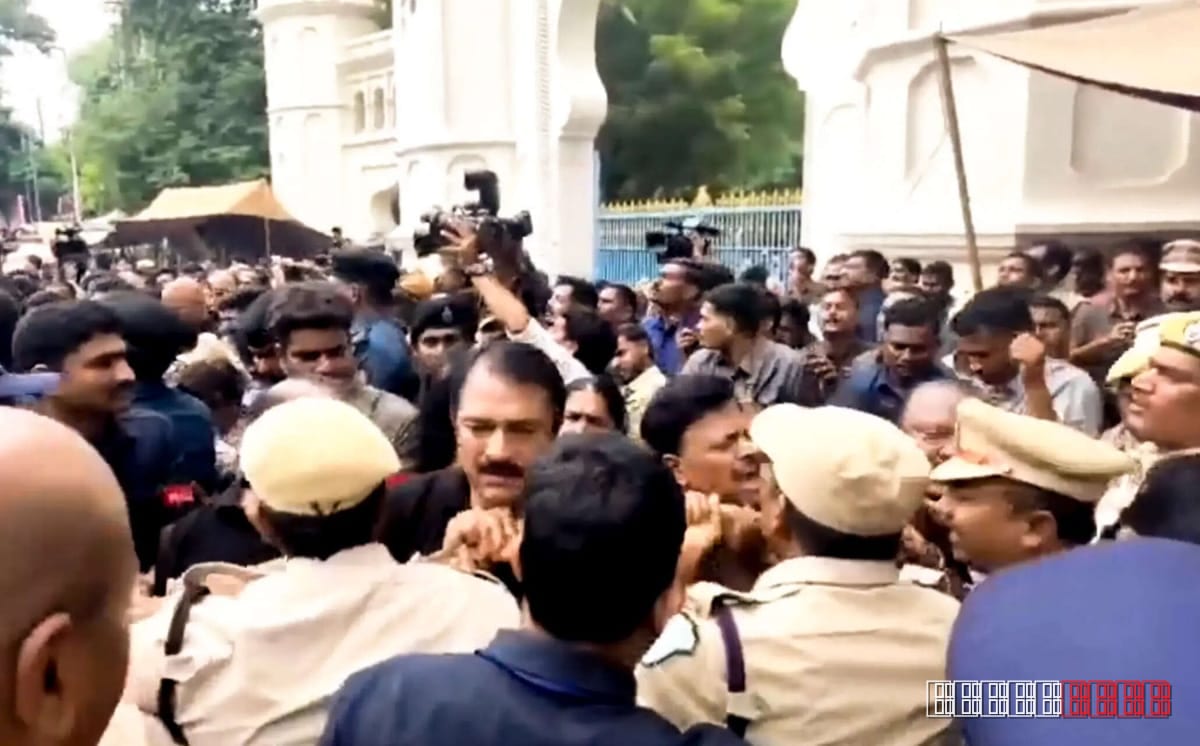
Senior Bharat Rashtra Samithi (BRS) leader K.T. Rama Rao was booked for allegedly assaulting police officers outside the Telangana Legislative Assembly, Times of India reported. The incident unfolded during a protest by party members who were attempting to enter the assembly complex to voice grievances over recent legislative decisions. According to the police complaint, Rama Rao and several other BRS cadres resisted attempts to disperse the crowd, leading to a physical altercation that resulted in the filing of a First Information Report (FIR) against the politicians involved.
The FIR lists multiple charges, including assault on a public servant and obstruction of duty. Police officials said they acted to maintain law and order after the protest turned violent. The arrested leaders were taken into custody and are expected to appear before a court later this week. The Times of India noted that the police have not released the exact number of individuals detained, but confirmed that the case will be investigated under the relevant sections of the Indian Penal Code.
Telangana’s political climate has been tense since the state’s formation in 2014, with the BRS—formerly known as the Telangana Rashtra Samithi—dominating the regional landscape. K.T. Rama Rao, a former minister and a close associate of Chief Minister K. Chandrashekar Rao, has been a prominent face of the party’s development agenda. However, internal dissent and opposition criticism have occasionally sparked street-level confrontations. Incidents involving lawmakers and law‑enforcement agencies are not unprecedented in Indian state politics, where protests often spill onto public grounds, prompting swift police action to prevent escalation.
The episode underscores the delicate balance between political expression and public order in Indian states. While elected representatives enjoy certain immunities, they remain subject to criminal law when alleged to have committed offenses. Legal experts point out that assaulting a police officer is a non‑bailable offence, and the courts typically take a stringent view of such cases to deter future misconduct. The outcome of Rama Rao’s case could set a precedent for how political protests are managed in Telangana and may influence the BRS’s approach to dissent ahead of upcoming local elections.
Observers will watch closely how the judiciary handles the matter, as it may affect the party’s public image and its relationship with law‑enforcement agencies. The incident also raises questions about the mechanisms in place to ensure that political protests remain peaceful while safeguarding democratic rights.
The situation remains fluid, with the BRS yet to issue an official statement on the FIR. Further developments are expected as the legal process unfolds.
This report is based on original reporting by Times of India. Read the original source →