China limits public tributes as former premier Zhu Rongji is laid to rest
State officials praised Zhu's economic reforms while tightening online and offline mourning to avoid political criticism of Xi Jinping's leadership.
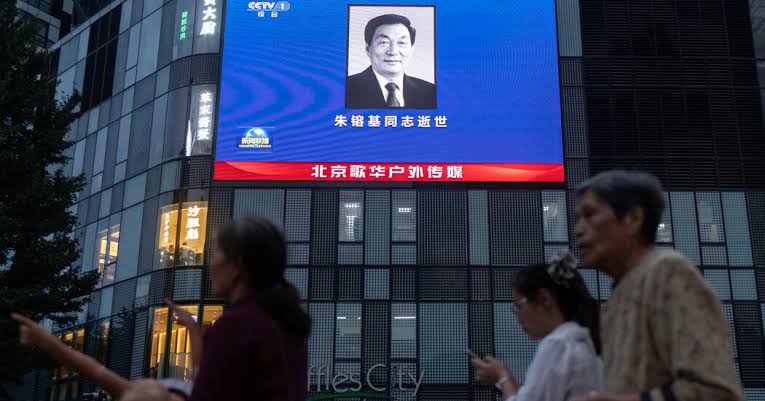
Chinese authorities have taken a cautious approach to the funeral of former premier Zhu Rongji, imposing restrictions on public expressions of grief. While official statements highlighted Zhu’s role in steering China through major economic reforms in the early 2000s, regulators issued guidelines that curb online posts, social‑media hashtags, and large‑scale gatherings that could turn the mourning into a platform for political dissent.
The state‑run news agencies aired a televised tribute that emphasized Zhu’s contributions to market liberalisation and poverty reduction, framing his legacy as a continuation of the current administration’s goals. At the same time, major internet platforms were instructed to delete content that “exaggerates” or “distorts” the former premier’s achievements, and several tribute videos were removed within hours of posting. Users attempting to share personal memories faced temporary account suspensions, and a number of popular hashtags related to the funeral were blocked on micro‑blogging sites.
The funeral ceremony itself was held at a government‑owned venue in Beijing, attended by senior party officials and members of the Politburo. Security forces were deployed to manage crowds, and the public was urged to observe “quiet and orderly” mourning. Organisers limited the number of mourners allowed at the venue, citing public‑health concerns and the need to maintain social stability.
Analysts note that the tight control mirrors past efforts to manage the public narrative surrounding the deaths of high‑profile leaders. By curbing spontaneous displays of nostalgia, the party aims to prevent any comparison between Zhu’s reform‑era policies and the more centralized direction under President Xi Jinping. The approach reflects a broader pattern of pre‑emptive censorship designed to keep political discourse firmly within the boundaries set by the Communist Party.
Despite the restrictions, many citizens have found subtle ways to honour Zhu, sharing private messages and low‑profile gatherings that escape official monitoring. The delicate balance between official commemoration and grassroots remembrance underscores the continuing tension between state authority and public sentiment in contemporary China.