Comedian Tests AI-Generated Avatar to Deliver His Own Jokes
Garrett Millerick builds a digital version of himself to see if artificial intelligence can replicate stand‑up humor.
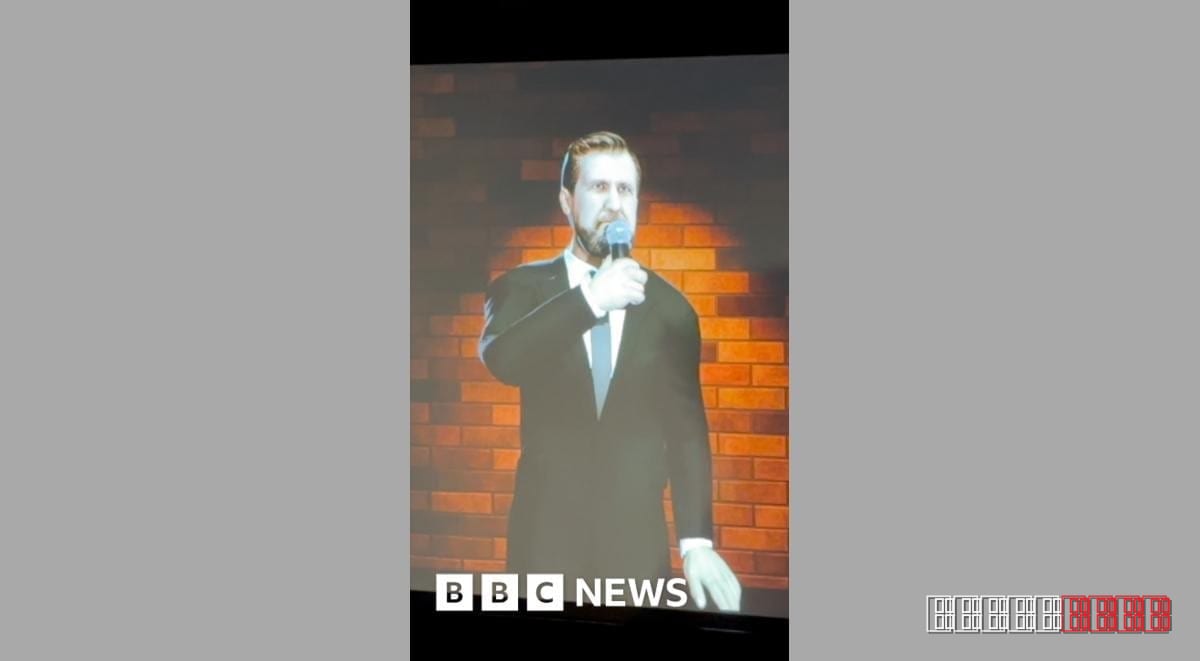
Garrett Millerick, a stand‑up comedian based in the United States, has taken a bold step into the world of artificial intelligence by creating a virtual avatar that tells jokes drawn from his own repertoire. The project, highlighted by BBC News, uses a blend of voice‑cloning software and video‑synthesis tools to generate a digital double that mimics Millerick’s delivery style.
According to BBC News, the AI comedian was trained on hours of Millerick’s recorded performances, allowing the system to reproduce his timing, intonation, and facial expressions. The resulting avatar performed a short five‑minute set that featured several of his classic punchlines, prompting a mixture of chuckles and puzzled reactions from a test audience.
The experiment raises questions about how well AI can capture the nuance of live comedy. While the avatar managed to reproduce Millerick’s cadence, observers noted that the spontaneous energy and audience interaction that define stand‑up were missing. BBC News reported that some jokes landed, but others fell flat, suggesting that humor may still rely heavily on human presence and improvisation.
Millerick’s venture is part of a broader trend where creators employ deep‑fake and generative‑AI technologies to produce virtual performers. From AI‑generated pop singers to news anchors that read headlines without a human behind the desk, the entertainment industry has been experimenting with synthetic personas for several years. These tools can lower production costs and enable 24/7 content, but they also spark debates over intellectual property and authenticity.
For comedians, the prospect of an AI replica raises both opportunities and concerns. On one hand, a digital double could allow performers to tour multiple venues simultaneously or generate content while they rest. On the other, it could dilute the unique connection between a comic and a live audience, and potentially lead to disputes over who owns the jokes when an algorithm reproduces them. Legal scholars note that current copyright law is still catching up with AI‑generated works.
Millerick says the project is an exploratory proof‑of‑concept rather than a replacement for his stage work. He plans to refine the avatar’s ability to respond to real‑time audience feedback, hoping to bridge the gap between scripted AI delivery and the improvisational spark that makes comedy resonate.
The experiment underscores how AI is reshaping creative fields, offering new tools while challenging long‑standing notions of authorship and performance.
This report is based on original reporting by BBC News. Read the original source →