Ireland eschews handshakes, dons black armbands in dominant Nations League win over Israel
The Republic of Ireland beat Israel 3-0 in the UEFA Nations League while foregoing pre‑match handshakes and wearing black armbands.
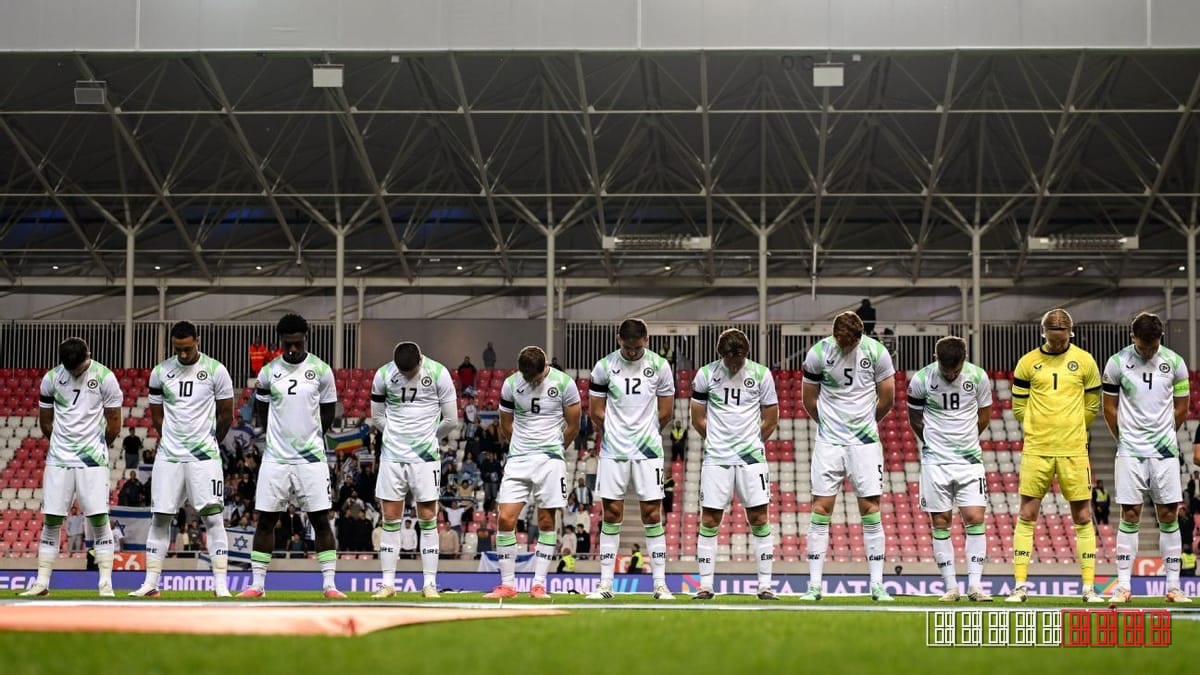
The Republic of Ireland secured a convincing 3‑0 victory against Israel on Sunday, advancing its standing in the UEFA Nations League. Before the final whistle, the Irish side chose not to engage in the customary handshakes that typically bookend international fixtures, and players appeared on the pitch wearing black armbands.
ESPN reported that the Irish squad deliberately omitted the pre‑match handshake ritual and that the black armbands were part of the team's visual presentation for the game. The match itself was largely one‑sided, with Ireland controlling possession and converting chances to seal the three‑goal margin.
The decision to forgo handshakes and the addition of armbands carry symbolic weight in a sport where gestures often reflect broader political or humanitarian concerns. While the team did not issue a formal statement explaining the specific motivation, such actions are frequently interpreted as a sign of protest, mourning, or solidarity, especially in matches that attract heightened geopolitical attention.
The Nations League, introduced in 2018, groups European nations into tiers where promotion and relegation are at stake. Ireland and Israel were placed together in League B, Group 2, a grouping that has previously sparked debate due to the political sensitivities surrounding Israel’s participation in European competitions. Past encounters have seen calls for boycotts and diplomatic pressure, making any on‑field interaction subject to scrutiny beyond the sport itself.
With the win, Ireland moves closer to a potential promotion to League A, while Israel faces a tougher road to avoid relegation. The result also sets the stage for the next round of fixtures, where both teams will look to consolidate their positions. Observers will be watching how the gestures displayed on the field influence future diplomatic dialogues between football governing bodies and national associations.
The broader football community continues to grapple with how to balance the sport’s apolitical ideals against the realities of international relations. Incidents like the Irish team’s choice of attire and protocol underscore the growing intersection of sport, politics, and public sentiment, prompting federations to consider clearer guidelines for future matches that may carry similar sensitivities.
This report is based on original reporting by ESPN. Read the original source →