Kremlin Uses Duma Vote to Reinforce Regime Credibility
Al Jazeera explains that Russia’s parliamentary election functions as a channel for participation, feedback and legitimacy, not just a staged performance.
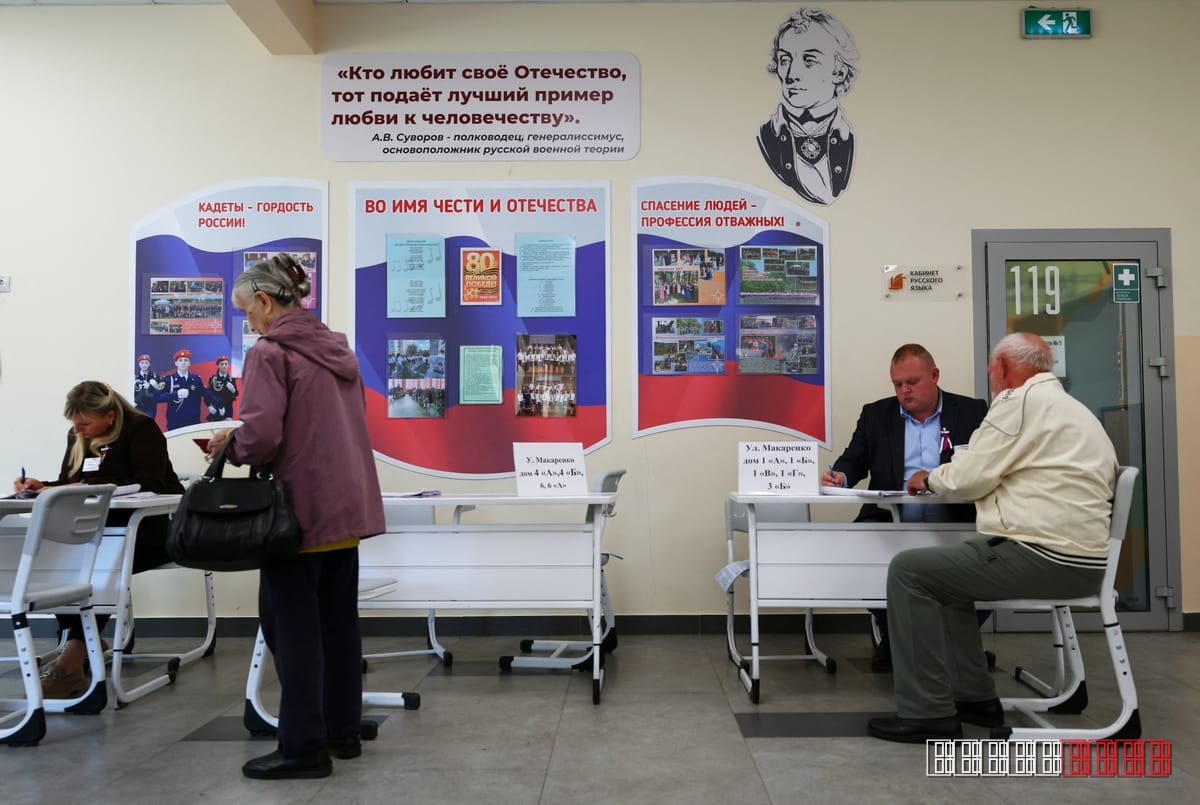
Al Jazeera reports that the Kremlin treats the upcoming State Duma election as a strategic instrument rather than a simple theatrical display. According to the outlet, the vote is intended to provide a controlled avenue for political participation, gather feedback from managed constituencies and reinforce the government’s claim to legitimacy.
The electoral system for the lower house combines single‑member districts with party‑list proportional representation, but the field of candidates is tightly curated. Media coverage overwhelmingly favors United Russia, while opposition figures face legal hurdles, registration refusals and limited access to campaign resources. As a result, the outcome is largely predictable, yet the process allows the regime to claim a veneer of democratic practice.
In the 2026 cycle, authorities have emphasized high turnout and civic duty, framing the election as a national responsibility. Al Jazeera notes that official rhetoric stresses the role of the Duma in reflecting public opinion, even as independent observers point to irregularities such as ballot stuffing and pressure on regional officials to deliver desired results. The election therefore functions as a feedback loop, signalling to the Kremlin which policy areas require adjustment while preserving the appearance of popular consent.
Historically, Russia’s post‑Soviet elections have oscillated between genuine competition in the 1990s and increasing centralisation under Vladimir Putin. The State Duma, created in 1993, was initially a venue for fragmented party politics, but reforms in the 2000s reshaped it into a body that largely mirrors the executive’s agenda. This evolution mirrors a broader pattern in authoritarian systems where elections are retained to manage elite rivalries, co‑opt potential dissent and project stability both domestically and abroad.
The stakes extend beyond internal legitimacy. International partners monitor the vote to gauge the Kremlin’s willingness to engage with global norms. A smooth, albeit managed, election can be used by Moscow to deflect criticism and argue against sanctions, while any visible dissent may embolden opposition movements and affect Russia’s diplomatic posture.
While the Duma’s legislative power remains limited compared with the presidency, the election’s symbolic weight endures. As Al Jazeera concludes, the Kremlin’s reliance on this electoral ritual underscores a calculated blend of authoritarian control and the need for a semblance of public endorsement, a balance that will shape Russia’s political trajectory in the years ahead.
This report is based on original reporting by Al Jazeera. Read the original source →