Madras Sanskrit College launches AI-powered model to preserve Sanskrit texts
The new AI Sanskrit Heritage Model aims to digitise and make ancient literature accessible globally, officials said.
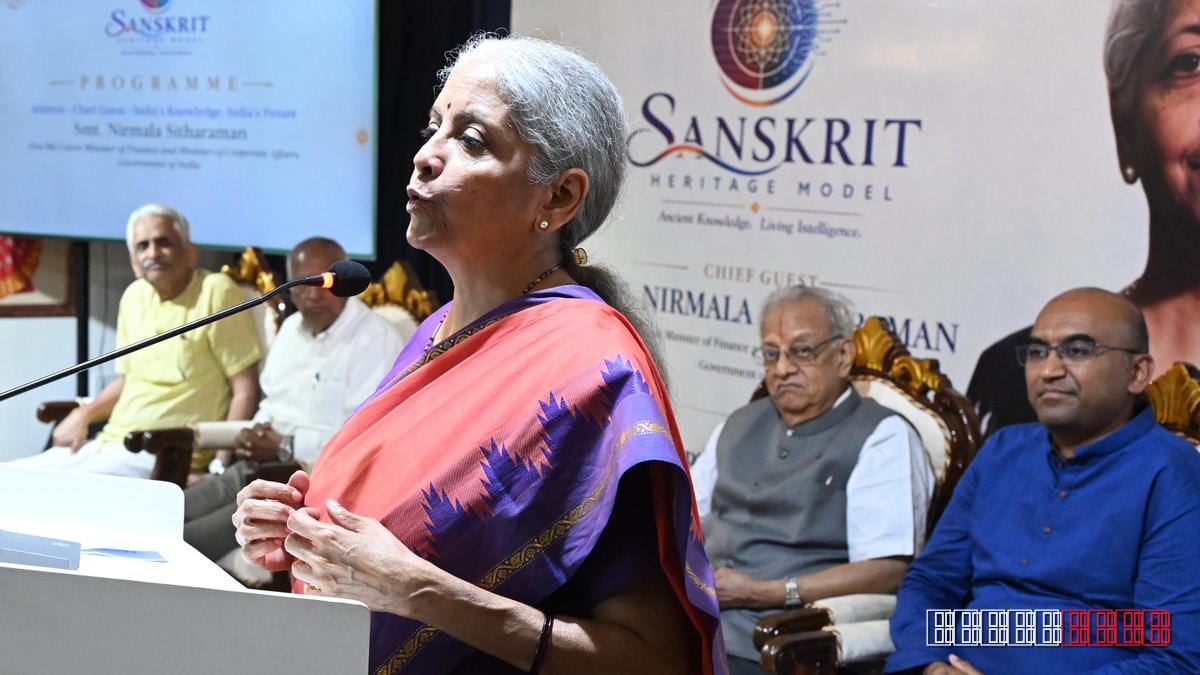
Madras Sanskrit College has unveiled an artificial‑intelligence‑driven platform designed to catalogue, transcribe and translate Sanskrit manuscripts, a step that could broaden access to the language’s vast literary corpus. The institution demonstrated the AI Sanskrit Heritage Model during a ceremony attended by Union Finance Minister Nirmala Sitharaman, who highlighted its potential to bring India’s cultural wealth to a worldwide audience.
According to The Hindu, Sitharaman remarked that “such efforts could make our literary treasures more accessible to everyone anywhere in the world at any time.” The launch marks the first major collaboration between a traditional Sanskrit college and a tech firm specializing in natural‑language processing, signalling a shift toward digital preservation in the humanities.
The AI system employs machine‑learning algorithms trained on thousands of digitised verses, enabling it to recognise script variations, suggest transliterations and generate English equivalents. Researchers hope the tool will accelerate scholarly work that previously required painstaking manual transcription. By automating routine tasks, the model could free experts to focus on interpretation and contextual analysis.
India has been investing heavily in language technology, with recent government initiatives targeting the digitisation of regional texts and the development of multilingual AI. However, Sanskrit, despite its historic importance, has lagged behind more widely spoken languages in terms of digital resources. The Madras Sanskrit College project seeks to fill that gap, aligning with the Ministry of Education’s broader push to integrate AI into cultural preservation.
The model’s rollout will begin with a pilot covering the college’s own collection of palm‑leaf manuscripts, many of which are fragile and at risk of deterioration. Once refined, the platform could be offered to other institutions across the country, creating a networked repository of Sanskrit literature. Stakeholders anticipate that increased accessibility may also spark renewed interest among younger generations and diaspora communities.
Experts caution that while AI can streamline digitisation, human oversight remains essential to ensure accuracy, especially given the nuanced grammar and multiple commentarial traditions of Sanskrit. The collaboration therefore includes a team of scholars who will validate outputs before public release.
If successful, the AI Sanskrit Heritage Model could serve as a blueprint for similar projects targeting other classical languages, reinforcing India’s ambition to safeguard its intangible heritage through technology.
This report is based on original reporting by The Hindu. Read the original source →