Vice President lauds Gandhi, Bose and Patel for shaping India's unity
C.P. Radhakrishnan praised the pivotal roles of Mahatma Gandhi, Subhas Chandra Bose and Sardar Patel in the freedom struggle and the integration of princely states.
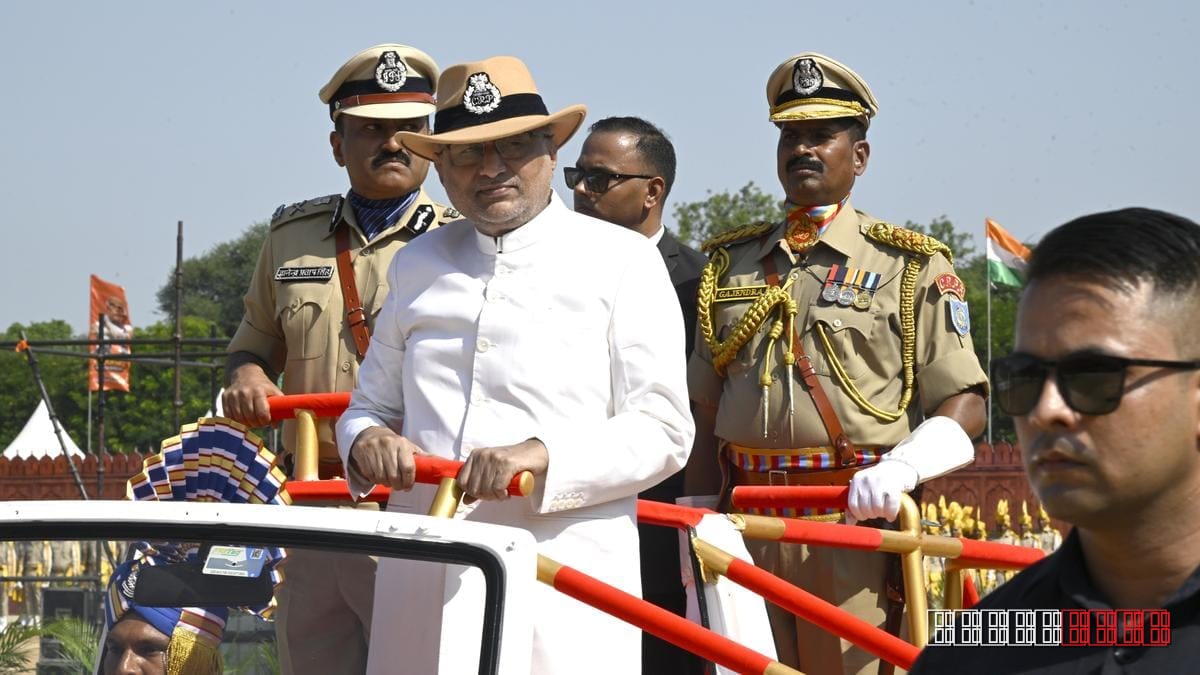
In a recent public address, Vice‑President C.P. Radhakrishnan underscored the enduring impact of three towering figures of India's independence movement. Referring to the legacy of Mahatma Gandhi and Subhas Chandra Bose, he said both leaders were "pivotal" in steering the nation toward freedom, while noting that Sardar Vallabhbhai Patel had been the chief architect behind the political integration of the former princely states, The Hindu reported.
Radhakrishnan highlighted Gandhi’s philosophy of non‑violent civil disobedience, which mobilised millions across diverse regions, and Bose’s more militant stance that complemented the broader struggle for self‑rule. By invoking both leaders, the Vice‑President aimed to present a balanced view of the multiple pathways that converged to end colonial rule.
Turning to the post‑1947 challenge of unifying a fragmented subcontinent, the Vice‑President credited Patel with the “instrumental” task of bringing over 500 princely entities into the Indian Union. Patel’s diplomatic outreach, combined with decisive actions in Hyderabad and Junagadh, ensured that the nascent republic emerged with clearly defined borders and a cohesive administrative framework.
The integration of princely states was a monumental undertaking that shaped modern India's political geography. At independence, more than 560 semi‑autonomous rulers faced the choice of joining the Union or remaining separate. Patel’s strategy blended negotiations, referendums and, when necessary, military intervention, preventing a patchwork of enclaves that could have hampered nation‑building. This consolidation laid the groundwork for a uniform constitutional democracy, allowing citizens across former princely territories to participate in a single political system.
Radhakrishnan concluded that the twin processes of political integration and constitutional democracy are the twin pillars that bind India’s diverse citizenry. By recalling the contributions of Gandhi, Bose and Patel, he reminded listeners that the country's unity rests on both the moral vision of its freedom fighters and the pragmatic statecraft that stitched the nation together.
This report is based on original reporting by The Hindu. Read the original source →