Washington Allocates $45 Million for Ecuadorian Security and New Coast Guard Boats
The United States will provide $45 million and extra naval vessels to boost Ecuador’s fight against drug trafficking, Secretary of State Rubio said.
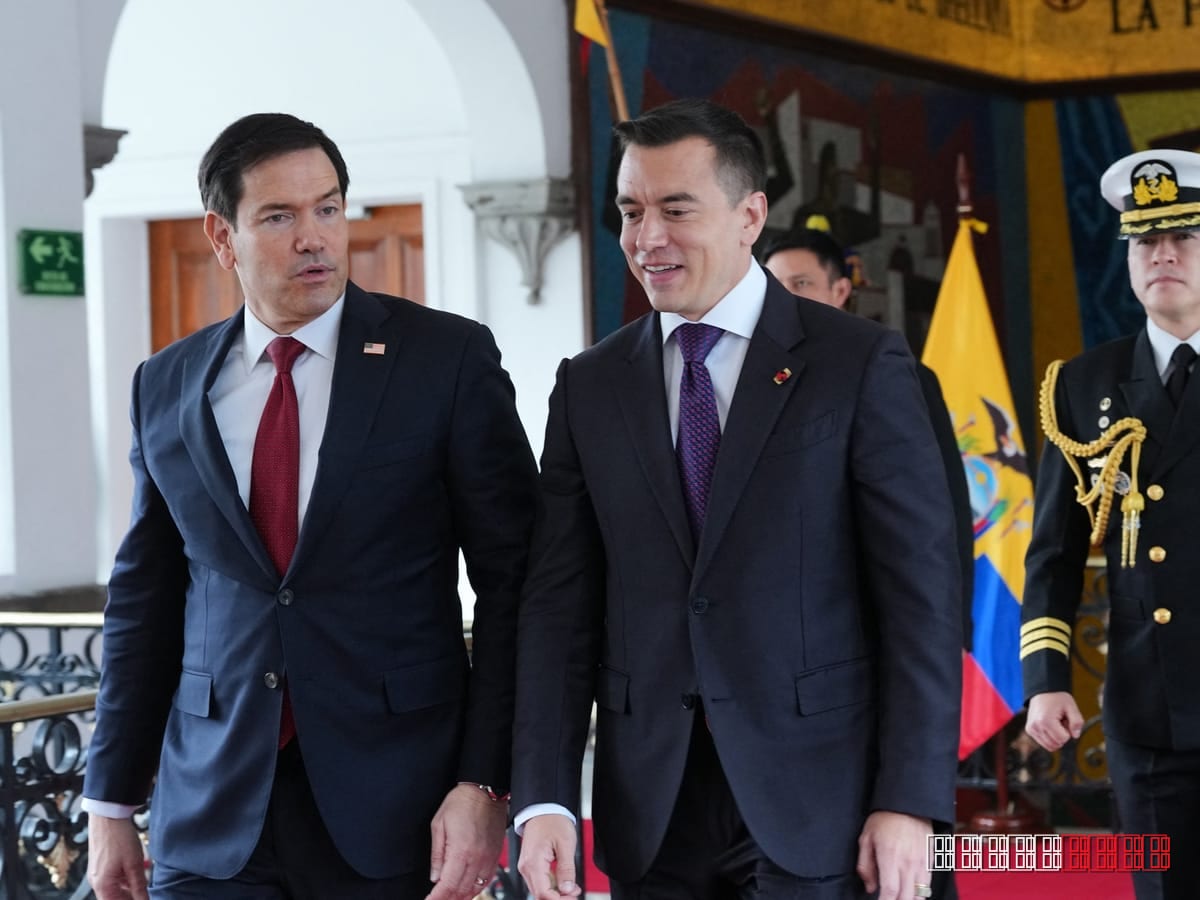
Washington announced a new security package for Ecuador that includes a $45 million grant and the delivery of additional naval vessels, aiming to strengthen the South American nation’s capacity to interdict drug shipments, Al Jazeera reported. The funding, earmarked for equipment, training and operational support, will be administered through the U.S. State Department’s security assistance programs. Secretary of State Rubio described Ecuador as “the United States’ most involved and aggressive partner” in the regional anti‑drug effort, underscoring the strategic importance of the partnership.
The grant will finance the acquisition of modern surveillance gear, communications systems and maintenance for the new ships, which are expected to join Ecuador’s coast guard fleet within the next year. Officials say the vessels are designed for rapid response and can operate in the Pacific and Atlantic approaches that have become key corridors for cocaine smuggling.
Ecuador has been a focal point of U.S. counternarcotics policy for decades. In the early 2000s, Washington launched the “Plan Colombia” spill‑over initiatives that extended aid to neighboring countries, including Ecuador, to curb the flow of narcotics. More recently, the U.S. has provided over $200 million in assistance for maritime interdiction and law‑enforcement training. The latest package builds on that foundation, reflecting a broader shift toward bolstering partner nations’ own capabilities rather than relying solely on U.S. assets.
Analysts note that the Pacific coast of Ecuador, especially the ports of Guayaquil and Manta, has seen a surge in clandestine shipments linked to Colombian and Peruvian cartels. Strengthening Ecuador’s naval presence is expected to disrupt these routes and reduce the volume of cocaine reaching North America and Europe. The move also aligns with Washington’s “Comprehensive Strategy for the Western Hemisphere,” which emphasizes regional cooperation, capacity‑building, and shared intelligence.
While the funding is welcomed by Quito’s government, critics caution that without robust oversight, resources could be misallocated. Nonetheless, the agreement includes provisions for regular reporting and joint audits, aiming to ensure transparency and effectiveness. The partnership is set to be reviewed annually, with the possibility of expanding assistance if measurable reductions in drug trafficking are achieved.
The announcement marks another step in a long‑standing security relationship that has evolved from direct U.S. interdiction missions to a more collaborative model, where Ecuador assumes a larger role in protecting its own waters and, by extension, the broader Americas.
This report is based on original reporting by Al Jazeera. Read the original source →