AfD Nears Majority in German Regional Vote, Raising Europe‑Wide Concerns
The far‑right Alternative for Germany falls just short of a majority, prompting questions about coalition options and the party’s influence beyond national borders.
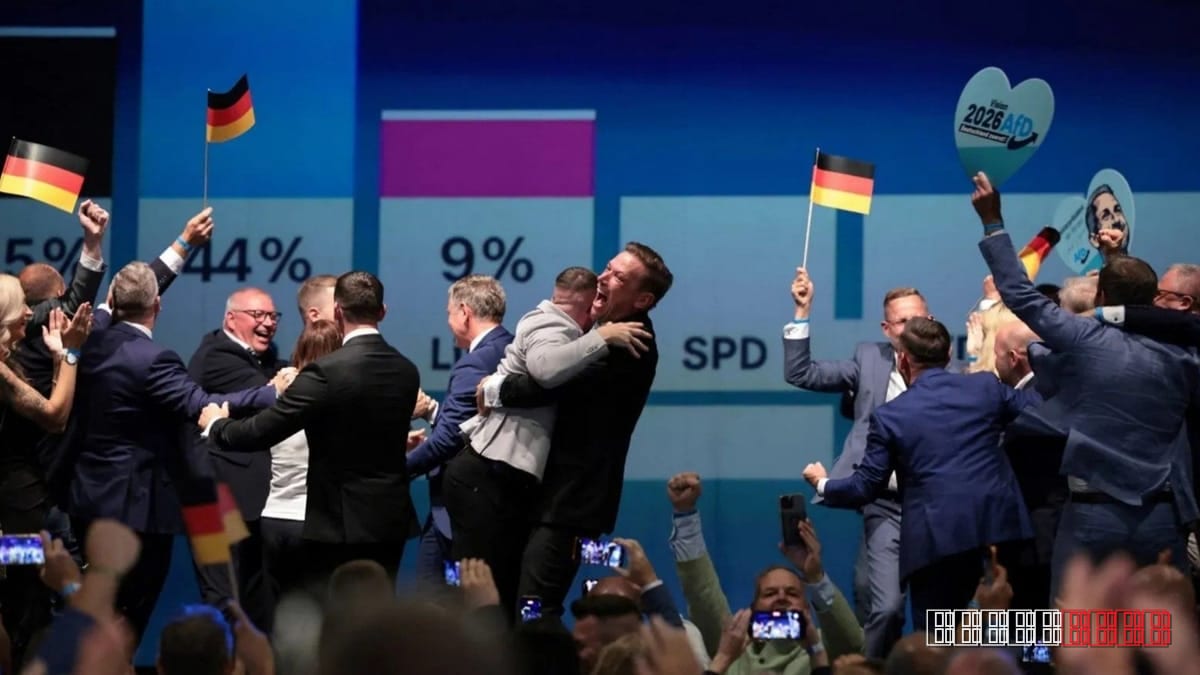
Al Jazeera reported that the Alternative for Germany (AfD) finished a recent regional election only a few percentage points away from securing an outright majority. While the exact vote share was not disclosed, the result marks the closest the party has come to governing a German state without needing coalition partners.
The narrow gap forces the state’s centrist and left‑leaning parties into a strategic dilemma. Forming a coalition that excludes the AfD would require them to align with each other despite policy differences, potentially leading to a fragile government. Conversely, any tacit accommodation of the AfD could legitimize its hard‑line platform, a prospect many mainstream politicians are keen to avoid.
Nationally, the outcome adds pressure to the federal political landscape ahead of the next Bundestag election. AfD’s surge in a regional stronghold signals that its voter base is expanding beyond its traditional eastern‑German heartland, a trend that could reshape the balance of power in Berlin. Analysts warn that a stronger AfD could compel the ruling coalition to adopt stricter immigration or security policies to recapture disaffected voters.
Founded in 2013 as a eurosceptic protest movement, the AfD quickly pivoted toward nationalist and anti‑immigration rhetoric, gaining parliamentary seats in 2017. Since then, it has become the most successful far‑right party in post‑war Germany, breaking through state parliaments in Saxony, Brandenburg and now this unnamed region. Its rise mirrors a broader pattern across Europe, where parties like France’s National Rally and Italy’s League have similarly capitalised on economic anxieties and cultural debates.
The European Union watches these developments closely, fearing that a stronger AfD could undermine Germany’s traditionally pro‑EU stance. A shift in German regional politics may embolden other nationalist movements, complicating consensus on issues such as climate policy, migration reform and fiscal integration. For now, the AfD’s near‑majority remains a test case of how democratic institutions respond when a far‑right force edges close to power.
This report is based on original reporting by Al Jazeera. Read the original source →