Cornwall residents moved as WWII bomb uncovered near Falmouth Docks
More than 300 homes are being evacuated after an unexploded World War II bomb was discovered close to the busy Falmouth harbour.
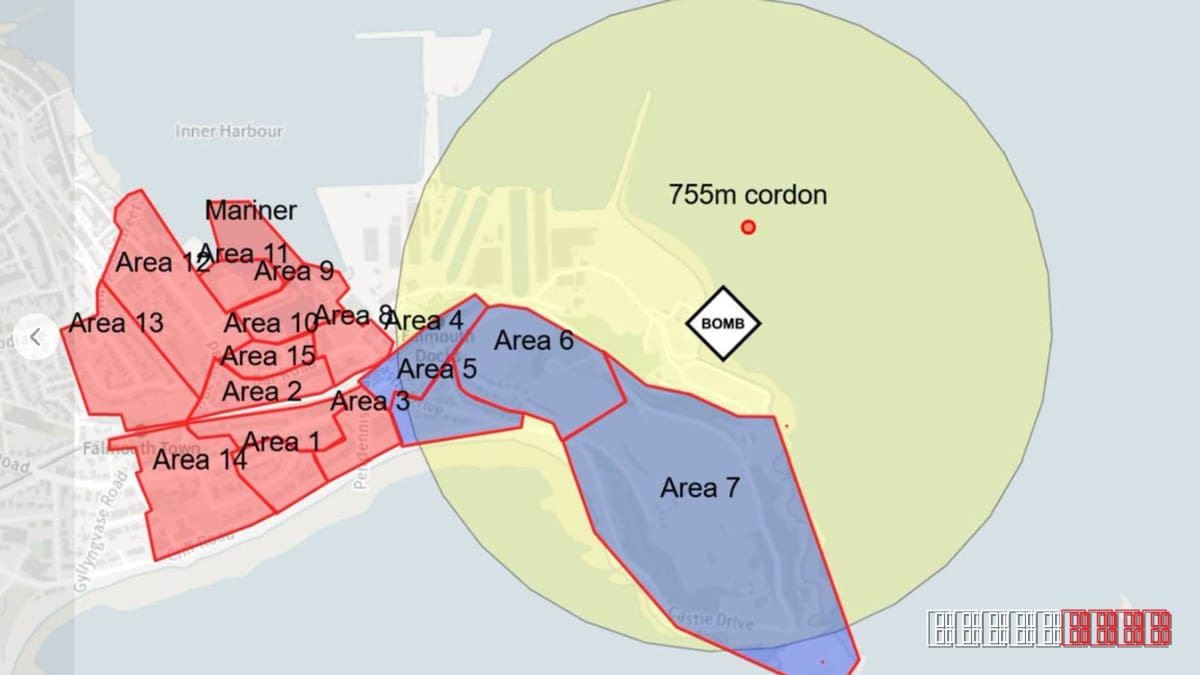
A large‑scale evacuation has begun in the Falmouth area of Cornwall after an unexploded World War II bomb was located near the docks, Sky News reported. The device, believed to be a 500‑pound aerial bomb, was found by contractors working on a waterfront development. Emergency services immediately cordoned off a two‑kilometre radius, prompting the removal of residents from over 300 households while a bomb disposal unit assesses the threat.
The Ministry of Defence’s Explosive Ordnance Disposal (EOD) team has set up a command post on the site and is working around the clock to render the bomb safe. According to Sky News, the evacuation includes both private homes and several commercial premises, with temporary accommodation being offered at nearby schools and community centres. Access roads to the docks and surrounding streets have been closed, and a traffic diversion is in place to minimise disruption for the busy shipping lane.
Unexploded ordnance from the Second World War continues to surface across the UK, particularly in coastal and industrial zones that were targeted by German air raids. Cornwall, with its strategic ports, was heavily bombed in 1940‑41, and thousands of munitions were dropped over the region. Over the past decade, an average of 30 to 40 live bombs are discovered each year, prompting a well‑established protocol: authorities secure the area, evacuate residents, and deploy specialist teams to either defuse or detonate the device in a controlled manner. The legacy of these hidden weapons underscores the long‑term safety challenges that persist decades after the conflict ended.
For the families affected, the sudden displacement is a logistical strain. Local councils have activated emergency housing registers and are coordinating with charities to provide food, bedding and transport. The incident also reignites public interest in Cornwall’s wartime heritage, with museums planning temporary exhibitions on the region’s role in the war effort.
The EOD unit expects to complete the safe disposal within 24‑48 hours, after which the exclusion zone will be lifted and residents allowed to return. Authorities have urged anyone who hears a loud bang or notices suspicious metal objects to report them immediately, reinforcing the message that vigilance remains essential even in peacetime.
This report is based on original reporting by Sky News. Read the original source →