Early End to US‑South Korea Drills Raises Concerns Amid Trump’s Kim Outreach
Joint military exercises were cut short as President Trump signals a desire for friendship with North Korea, prompting worries in Seoul about security gaps.
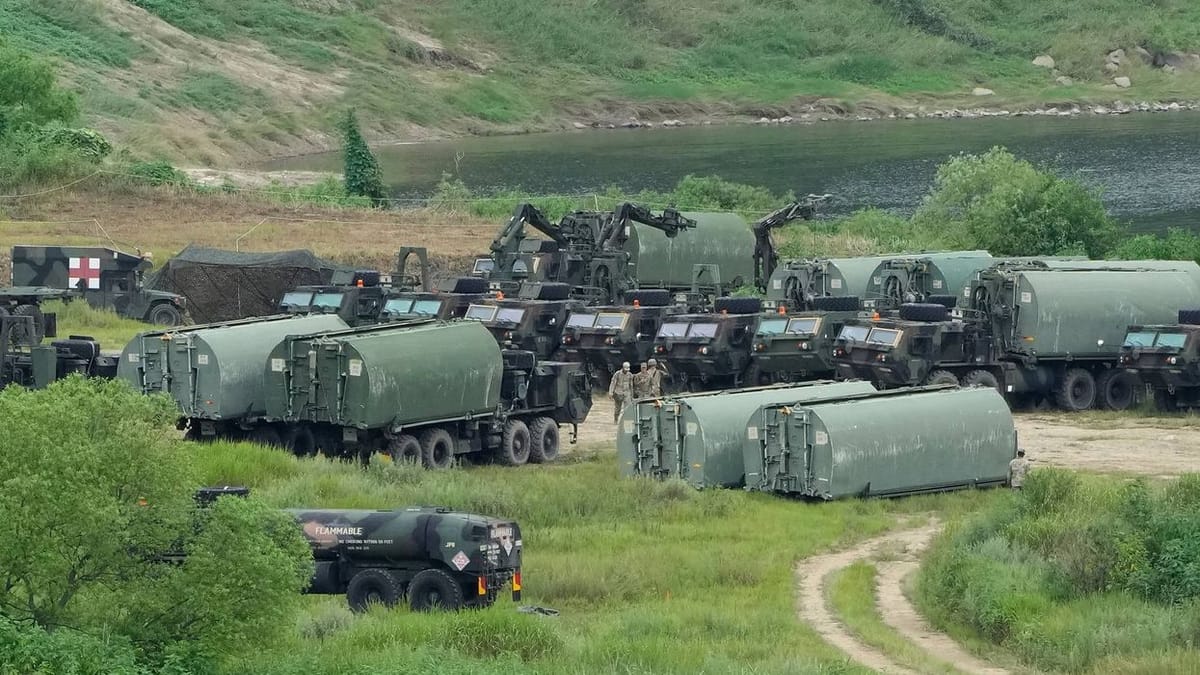
U.S. and South Korean forces wrapped up their annual joint military drills a day earlier than planned on Friday, a move that coincides with President Donald Trump’s repeated statements that he wants to be friends with North Korean leader Kim Jong un. The abrupt conclusion of the exercises, which typically involve air, land and sea components, was presented by the two governments as a step to reduce regional tension while diplomatic channels remain open.
Trump’s overtures to Kim have been a hallmark of his foreign‑policy agenda since the historic summit in Singapore last year. He has repeatedly framed a personal rapport with the North Korean ruler as a pathway to denuclearisation, even as critics argue that the rhetoric outpaces concrete progress. In recent weeks, the president has hinted at further talks, suggesting that a “friendly” relationship could be cultivated without preconditions.
South Korean officials, however, warned that the early cessation of the drills leaves the peninsula’s southern side in a vulnerable posture. With North Korea recently showcasing new missile capabilities and conducting a series of short‑range launches, analysts say the North now enjoys a tactical advantage. The timing of the exercise pause, they argue, could be interpreted as a concession that benefits Pyongyang more than Seoul.
The decision also sparked debate within the U.S. defense establishment. Some senior officers expressed concern that scaling back the drills reduces readiness and sends mixed signals to allies. Yet the Pentagon’s public statement emphasized that the move was coordinated with South Korean counterparts and reflected a “flexible approach” to maintaining stability.
As diplomatic overtures continue, the balance between engagement and deterrence remains delicate. Observers note that any shift in the U.S.–South Korea security partnership will have direct implications for the Korean Peninsula’s future, especially if North Korea leverages its current strength to extract concessions.