Jury Acquits Man Charged Over Defacing Churchill Statue in London
A London court has cleared a defendant of criminal damage after he was accused of vandalising Sir Winston Churchill’s Parliament Square monument, Sky News reports.
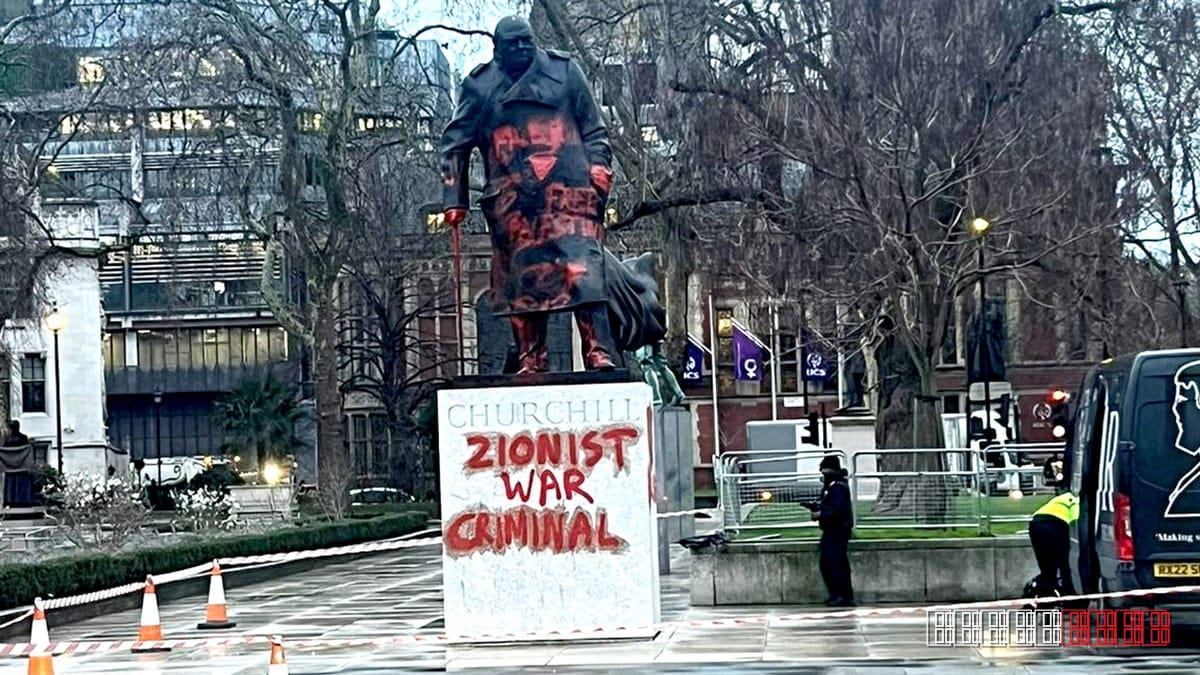
A London jury has returned a not‑guilty verdict for the man accused of defacing Sir Winston Churchill’s bronze statue in Parliament Square, ending a high‑profile criminal damage case. Sky News reported that the 28‑year‑old defendant was found innocent after a brief deliberation, despite photographic evidence of graffiti on the monument.
The defendant faced a charge of criminal damage under the Criminal Damage Act 1971, which carries a maximum sentence of up to ten years in prison. During the trial, prosecutors argued that the graffiti – a spray‑painted slogan – was deliberately placed to insult the former prime minister. The defence countered that the markings were either accidental or did not meet the legal threshold for “damage” as defined by the statute. The jury ultimately concluded that the prosecution had not proved the elements of the offence beyond reasonable doubt.
Churchill’s statue, unveiled in 1973, is a prominent fixture in Parliament Square, a space that hosts statues of other world leaders and is a frequent site for public demonstrations. Its location opposite the Houses of Parliament makes it a symbolic target for both tribute and protest. Over the years, the monument has endured several acts of vandalism, ranging from chalk slogans to more elaborate paint jobs, each sparking debate about the balance between free expression and respect for historic symbols.
Incidents of defacing the statue have often reignited discussions about Britain’s colonial legacy and the public’s right to challenge historical narratives. Earlier this decade, activists temporarily covered the statue with a sheet of fabric to highlight concerns over Churchill’s wartime policies. Such actions, while drawing media attention, have also prompted calls for stronger legal protection of public art.
Under UK law, criminal damage requires proof that the accused intentionally or recklessly destroyed or damaged property, and that the damage was more than “trivial.” In this case, the jury appears to have accepted the defence’s argument that the graffiti did not constitute significant harm, leading to the acquittal. Legal experts note that the decision underscores the difficulty of securing convictions when the alleged damage is primarily symbolic rather than physical.
The verdict closes the immediate legal chapter, but the statue remains a focal point for future protests. Authorities have indicated that they will continue to monitor the site and may consider additional security measures. Meanwhile, the acquitted individual is free to resume his life, though the case may influence how future acts of political expression on public monuments are prosecuted.
This report is based on original reporting by Sky News. Read the original source →