Rare footage shows 40‑foot jellyfish gliding off Wales
Marine photographer Iestyn Morgan captured a giant jellyfish with tentacles up to 40 feet long, offering a glimpse into the hidden life of Welsh seas.
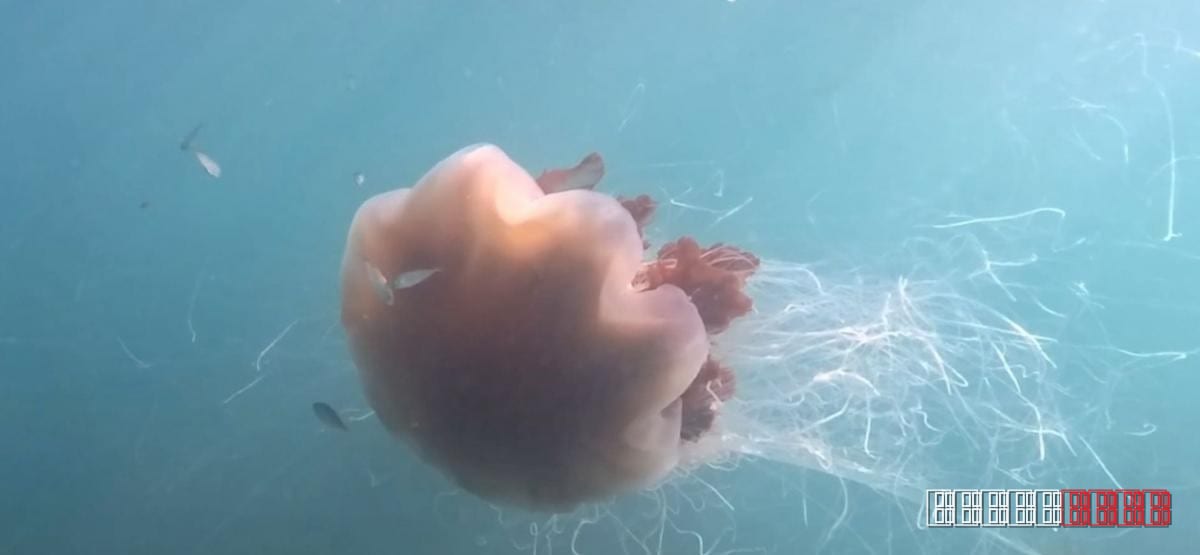
A striking video filmed off the Welsh coast has revealed an enormous jellyfish whose trailing tentacles stretch close to 40 feet. The footage, released this week, was captured by marine photographer Iestyn Morgan while he was conducting a routine dive in Cardigan Bay, according to BBC News. The animal drifts slowly in the water column, its bell measuring roughly the size of a small car, while its long, ribbon‑like arms ripple with each gentle current.
Scientists identify the creature as a lion’s‑mane jellyfish (Cyanea capillata), the largest known jellyfish species in the northern hemisphere. Individuals of this species can reach bell diameters of up to 2 metres, and their tentacles have been recorded at lengths of 30 metres (about 100 feet) in the cold waters of the North Atlantic. The specimen in Morgan’s video falls within the lower end of that range, but its size is still extraordinary for the relatively temperate waters around Wales, a region where such giants are seldom observed.
Morgan, who runs the outreach project “Welsh Waters”, says his goal is to make the marine world of Wales more visible to the public. He has spent the past several years photographing and filming marine life along the coast, hoping that vivid images will inspire both locals and visitors to appreciate and protect their underwater heritage. “When people see something this spectacular, it changes the conversation about our seas,” he told BBC News.
Giant jellyfish are rarely documented because they inhabit deeper, colder layers that are difficult for divers and standard equipment to reach. Seasonal migrations and the species’ fragile, gelatinous bodies also make them easy to miss. Researchers rely on occasional strandings, specialized submersibles, or lucky encounters like Morgan’s to gather data on their distribution and health. Such observations are valuable; fluctuations in lion’s‑mane populations can signal broader changes in ocean temperature and prey availability, offering clues about the impacts of climate change on marine ecosystems.
The new video adds to a growing collection of citizen‑science contributions that help fill gaps in scientific knowledge. By sharing the footage online, Morgan hopes to spark further interest in marine monitoring programs and encourage more people to report unusual sightings. As oceanographers warn that warming seas may alter the range of many gelatinous species, visual records like this become essential tools for tracking ecological shifts in real time.
This report is based on original reporting by BBC News. Read the original source →