Rescue teams battle floods to free hundreds trapped in Nepal’s hydro plants
Harsh weather and rugged mountains are testing Nepal’s army and police as they race to locate and save over 500 people stranded in six hydro‑power sites after flash floods.
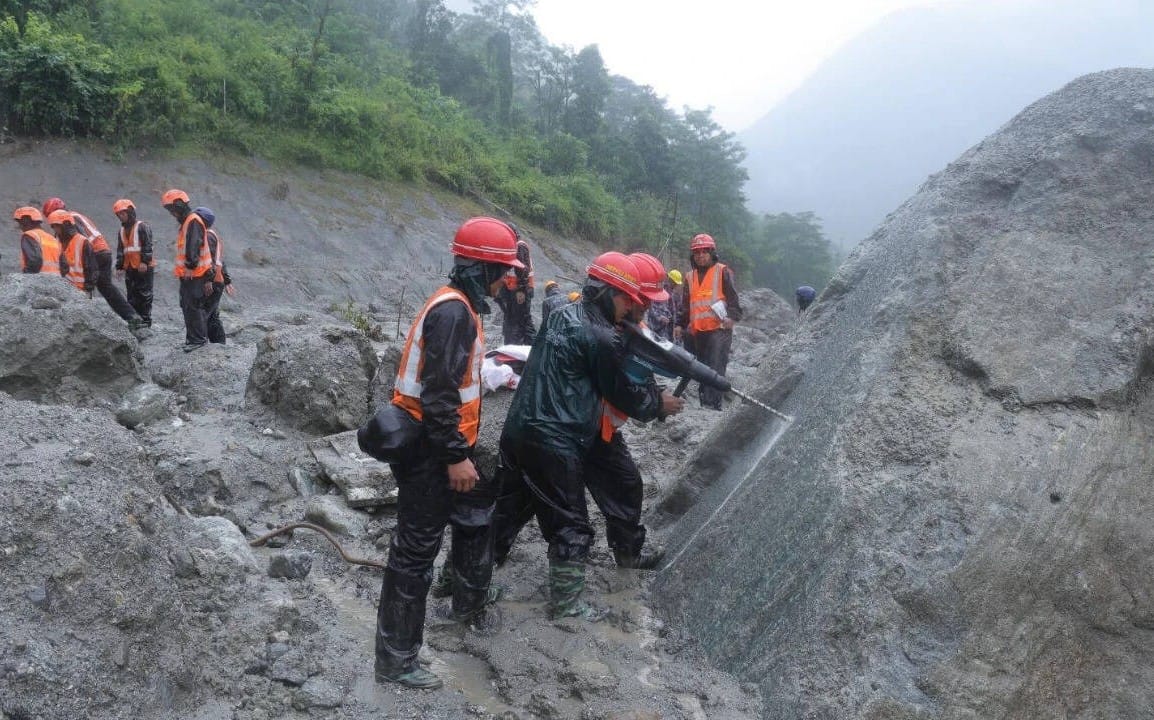
The monsoon‑driven flash floods that swept through Nepal’s hilly terrain this week have inundated six hydro‑power projects, leaving officials fearing that more than 500 workers, engineers and local residents are trapped inside the flooded facilities.
The Nepalese Army, together with the Armed Police Force, has launched what is being described as one of the nation’s largest rescue operations in recent memory. Teams have been dispatched on foot, by helicopter and via all‑terrain vehicles, confronting steep slopes, landslides and continuous rain that hamper movement and visibility. Even as night falls, rescuers press on, aware that every hour reduces the chances of survival for those awaiting help.
To overcome the daunting access problems, the forces are employing a suite of modern tools. Drones equipped with high‑resolution cameras are conducting aerial surveys, mapping water levels and pinpointing possible safe zones. Meanwhile, portable drilling rigs have been brought in to bore through debris and create temporary shafts, allowing rescuers to reach pockets of air and deliver essential supplies such as food, water and medical kits.
The operation spans six separate hydro‑electric sites scattered across the districts of Kaski, Lamjung, and Gorkha. Coordination between army units, police squads and local disaster management officials is being managed from a central command centre that monitors real‑time data from the drones and field reports. Despite the logistical hurdles, several small groups have already been evacuated, and the focus now shifts to locating the larger clusters of people believed to be sheltering in underground chambers and turbine houses.
Authorities warn that the window for safe rescue is narrowing as water levels continue to rise and the ground remains unstable. International aid agencies have offered technical assistance, but the bulk of the effort rests on Nepal’s own emergency services. The coming days will determine how many of the estimated 500 individuals can be brought to safety before the floodwaters recede.