Serbian officials escort Ratko Mladic's remains with full military ceremony
The former Bosnian Serb commander’s body was flown to Belgrade and received a formal guard of honor, sparking regional debate.
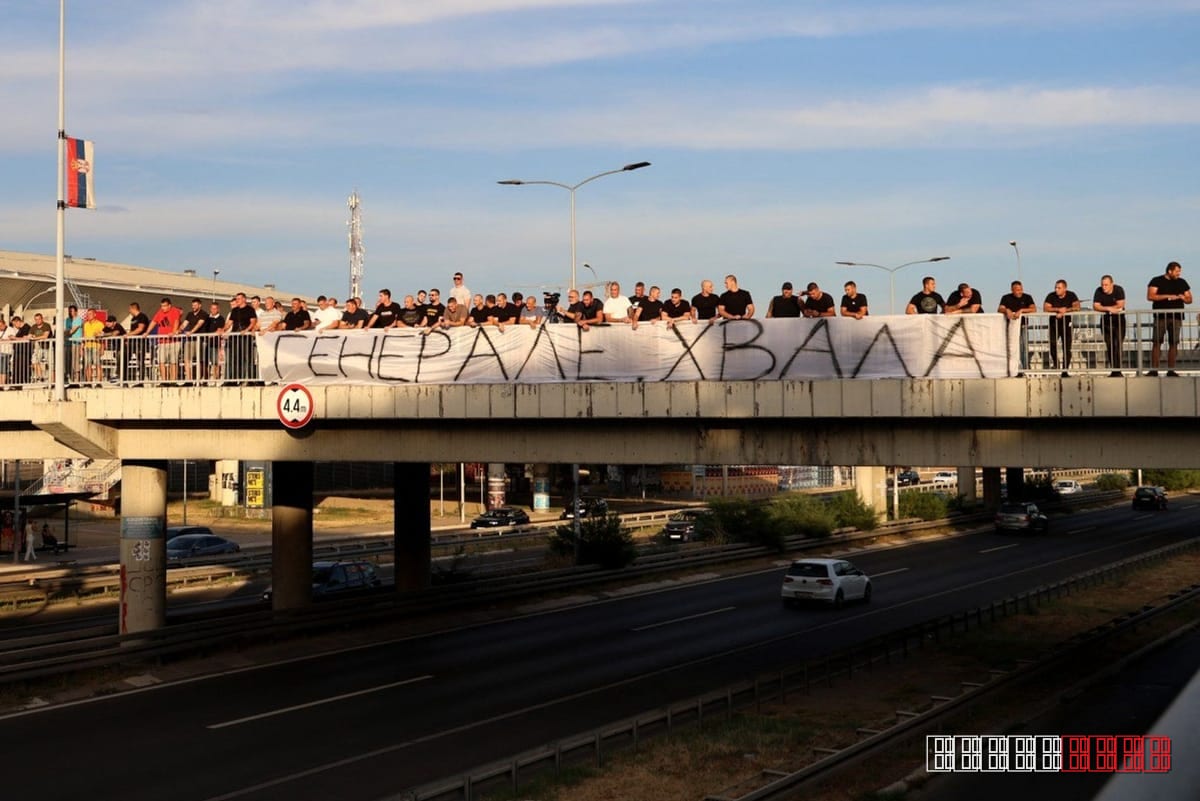
The remains of former Bosnian Serb army chief Ratko Mladic arrived in Belgrade on Sunday, where they were met by a ceremonial military guard, according to Al Jazeera. The transport, a government‑chartered aircraft, landed at the Nikola Tesla Airport before the body was taken to a military facility for the honors.
Serbian officials said the protocol was intended to respect the wishes of Mladic’s family, who have long sought a burial in the capital. The ceremony included a folded flag and a three‑volley salute, elements traditionally reserved for high‑ranking officers. No public funeral has been scheduled yet, and the final resting place remains undecided.
Mladic, once dubbed the “Butcher of Bosnia,” was convicted in 2017 by the International Criminal Tribunal for the former Yugoslavia (ICTY) for genocide, war crimes and crimes against humanity committed during the 1995 siege of Srebrenica and the broader Bosnian war. He served a 40‑year sentence in a German prison until his death in March 2026. His conviction has made him a polarising figure: hailed as a war hero by some nationalist circles in Serbia and condemned as a mass murderer by the international community.
The decision to grant full military honors has reignited tensions between Belgrade and neighboring countries, particularly Bosnia and Herzegovina, which have repeatedly called for Serbia to treat Mladic’s legacy in line with international rulings. Human rights groups argue that such ceremonies risk glorifying a convicted war criminal and could undermine regional reconciliation efforts.
Serbia’s government has faced criticism for its ambiguous stance on wartime accountability. While it has cooperated with the ICTY in the past, domestic politics often pressure officials to balance international obligations with nationalist sentiments. The handling of Mladic’s remains may set a precedent for how other high‑profile figures from the 1990s conflicts are commemorated.
The episode underscores the lingering impact of the Yugoslav wars on contemporary Balkan politics. As the region continues to grapple with its past, the manner in which former combatants are remembered—or honored—remains a flashpoint for diplomatic relations and internal discourse.
This report is based on original reporting by Al Jazeera. Read the original source →