Xi Calls on BRICS to Pursue Middle East Stability
At a BRICS summit, Chinese President Xi Jinping urged member states to cooperate on diplomatic efforts aimed at ending the regional conflict.
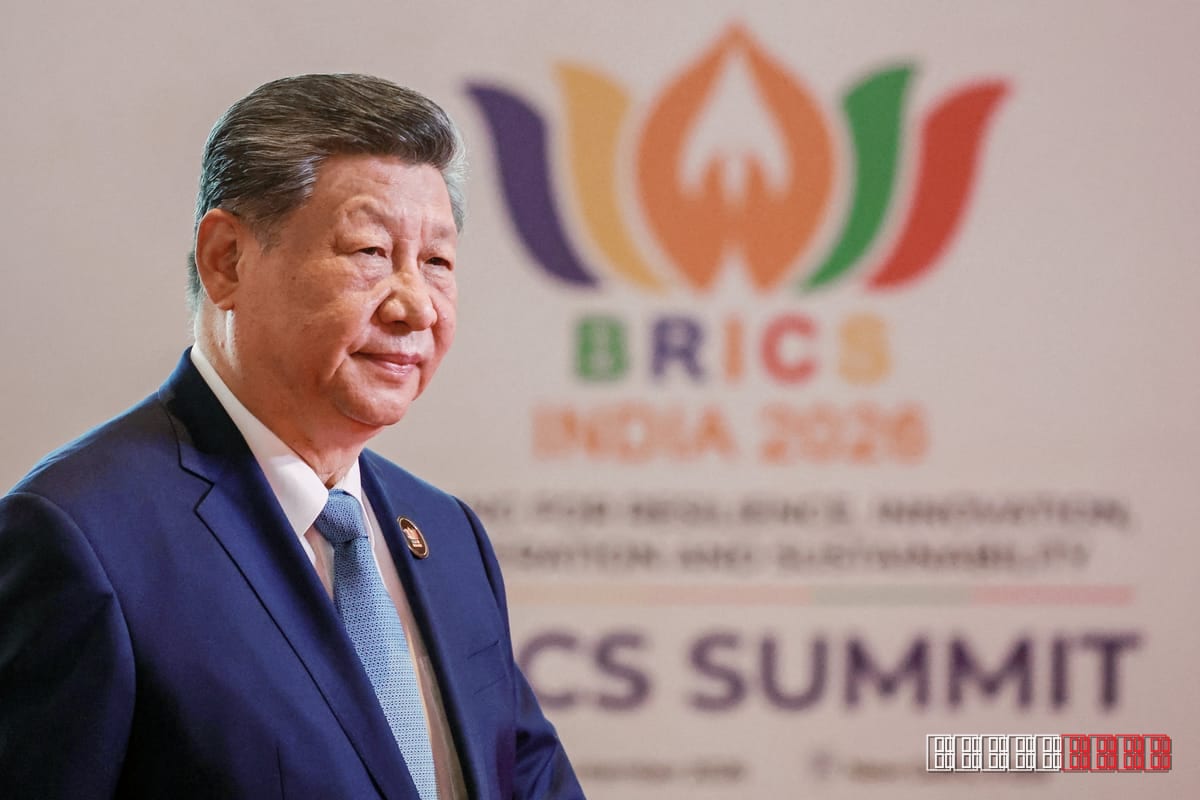
Chinese President Xi Jinping used the opening session of the BRICS leaders’ summit to appeal to the bloc’s members for a coordinated push toward peace in the Middle East. Xi told the gathering that the emerging economic alliance should leverage its collective influence to help de‑escalate the fighting, a stance that marks a more pronounced diplomatic overture from Beijing, CNBC reported.
China’s willingness to engage stems in part from its deep economic ties with Iran, which remains its largest trading partner in the region and a major buyer of Tehran’s oil exports. According to CNBC, those commercial links give Beijing a strategic interest in seeing stability return to the energy‑rich corridor, and the president signaled that China is prepared to work through BRICS mechanisms to support any peace initiative.
The BRICS grouping, founded in 2010 by Brazil, Russia, India, China and South Africa, has increasingly positioned itself as a counterweight to Western‑led institutions. While the bloc has traditionally focused on trade and development, its members have begun to explore a broader political agenda, including conflict mediation. Xi’s call therefore represents a shift from purely economic cooperation toward a more active role in global security discussions.
U.S. policymakers are watching the development closely. For decades, Washington has been the principal external broker in Middle‑East negotiations, and a coordinated BRICS approach could introduce a new diplomatic dynamic. Analysts note that any Chinese‑led initiative may either complement or compete with U.S. efforts, depending on how closely the positions of the two powers align on issues such as sanctions and regional security guarantees.
The path to peace, however, remains fraught. The conflict involves multiple state and non‑state actors, and cease‑fire talks have stalled despite intermittent humanitarian pauses. Xi’s appeal underscores Beijing’s broader foreign‑policy goal of being seen as a responsible global stakeholder, yet the effectiveness of a BRICS‑driven peace plan will depend on the willingness of the warring parties to engage with an unconventional diplomatic forum.
As the summit concludes, observers expect a formal communiqué that may outline specific steps the BRICS nations will take, ranging from confidence‑building measures to joint diplomatic outreach. The coming weeks will reveal whether the bloc can translate Xi’s rhetorical commitment into concrete actions that influence the trajectory of the Middle‑East conflict.
This report is based on original reporting by CNBC. Read the original source →