BRICS Summit Sparks Debate Over Its Capacity to Diminish Western Hegemony
Experts argue the bloc need not supplant the West, only make its dominance harder to sustain, as leaders gather in Johannesburg.
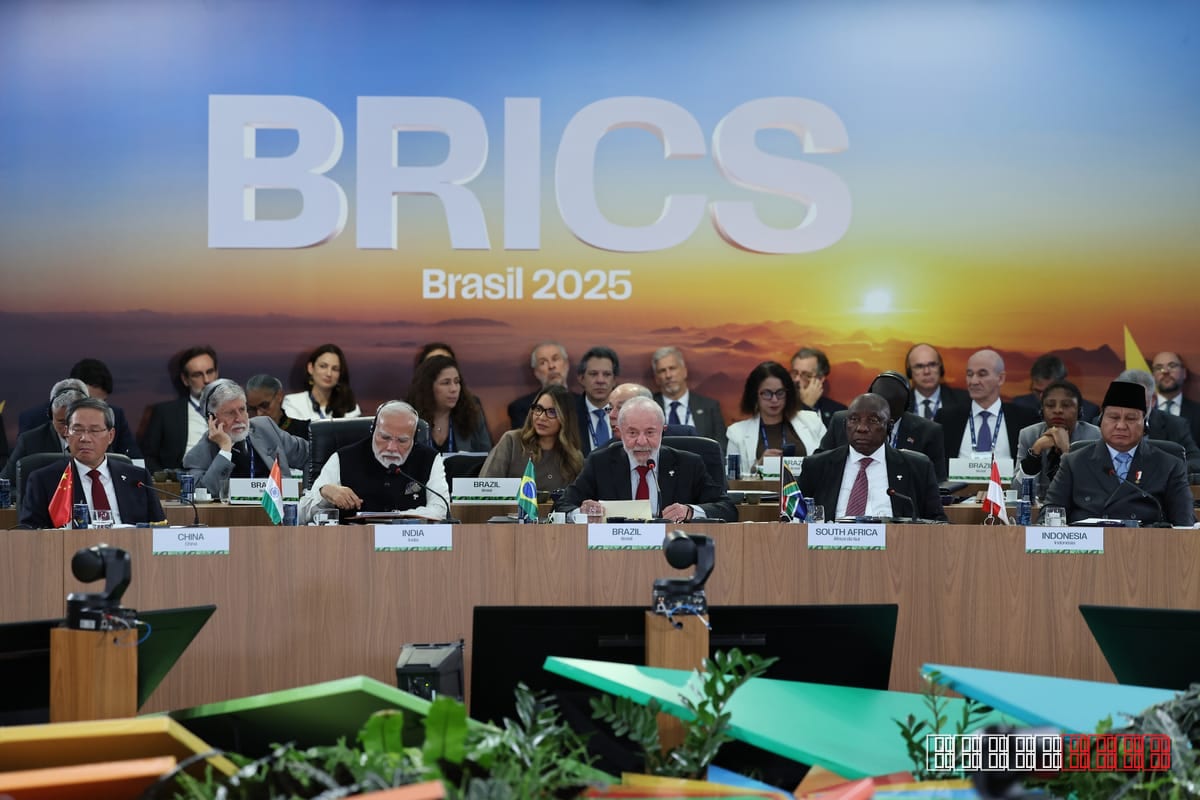
The latest BRICS summit in Johannesburg has reignited discussion about whether the coalition can genuinely curb the influence of Western powers. Al Jazeera reported that a number of analysts believe the group does not have to replace the West outright; it merely needs to complicate the exercise of Western dominance in global affairs.
During the three‑day meeting, heads of state from Brazil, Russia, India, China and South Africa pledged to deepen economic cooperation and accelerate the development of alternative financial infrastructures. They highlighted the New Development Bank’s expanded lending capacity and discussed a potential digital currency to facilitate trade outside the traditional dollar‑centric system.
Formed in 2009 as an informal dialogue among five emerging economies, BRICS was elevated to a full summit format in 2017. The bloc has since positioned itself as a platform for reforming international institutions such as the International Monetary Fund and the United Nations, arguing that the current architecture reflects a post‑World War II order dominated by the United States and Europe. Its members collectively account for about 40 % of the world’s population and roughly a quarter of global GDP, giving the group a demographic and economic weight that underpins its calls for a more multipolar world.
The experts cited by Al Jazeera stress that the bloc’s strategy may be more pragmatic than revolutionary. Rather than seeking to dismantle Western institutions, BRICS appears intent on creating parallel mechanisms that give its members greater bargaining power. This approach, they say, could erode the unilateral leverage the West has traditionally enjoyed without triggering a direct confrontation.
If the summit’s pledges translate into concrete projects, the ripple effects could be felt across trade, finance and diplomatic circles. A more robust BRICS network may encourage other developing nations to explore alternatives to Western‑led systems, potentially reshaping investment flows and geopolitical alignments in the coming years.
This report is based on original reporting by Al Jazeera. Read the original source →