Judge Says Tiny Slice of Nashik Kumbh Funds Could Have Saved Hundreds of Schools
A senior judge warned that just 0.1% of the festival’s budget might have prevented the closure of more than a hundred Marathi schools.
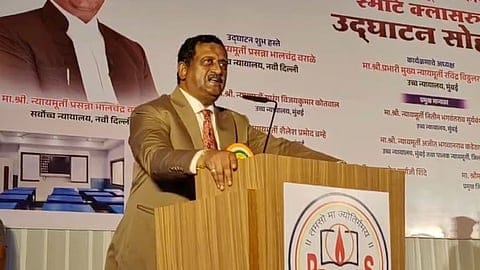
A senior judge has drawn attention to the stark contrast between the spending on the Nashik Kumbh Mela and the financial distress facing Marathi‑medium schools in Maharashtra. Justice P. B. Varale, presiding over a case concerning the viability of several government‑run schools, remarked that allocating merely one‑tenth of a percent of the Kumbh’s budget could have kept between 100 and 125 schools open.
The Kumbh Mela, one of the world’s largest religious gatherings, draws millions of pilgrims to Nashik each year. Organisers allocate a multi‑crore‑rupee budget for infrastructure, security, sanitation and pilgrim services. While the exact figure for this year’s event has not been disclosed, the judge’s comment suggests that even a modest re‑allocation could have a meaningful impact on education funding.
Maharashtra’s education department has been grappling with a wave of school closures, particularly in rural and semi‑urban areas where Marathi‑medium institutions serve as the primary learning centres for local children. Dwindling enrolments, rising operational costs and delayed government disbursements have forced authorities to consider shutting down schools that are no longer financially viable.
Justice Varale’s observation came during a hearing that examined the state’s duty to ensure uninterrupted access to basic education. He emphasized that the government must balance cultural and religious expenditures with its core responsibility to fund public services, especially when the latter directly affect children’s futures.
State officials have not publicly responded to the judge’s remarks, but the comment adds to a growing chorus of critics who argue that large‑scale event budgets often overlook pressing social needs. Education advocates hope the statement will prompt a review of fiscal priorities and encourage a more equitable distribution of public resources.
The dialogue underscores a broader debate about how India allocates funds for mega‑events versus essential services. As the Kumbh Mela proceeds, the spotlight remains on whether policymakers will heed the court’s reality check and adjust spending to safeguard the nation’s educational infrastructure.