BRICS leaders gather in New Delhi as US trade policies reshape alliances
China, Russia and India meet amid American tariffs, sanctions and the Iran conflict, testing the bloc's cohesion.
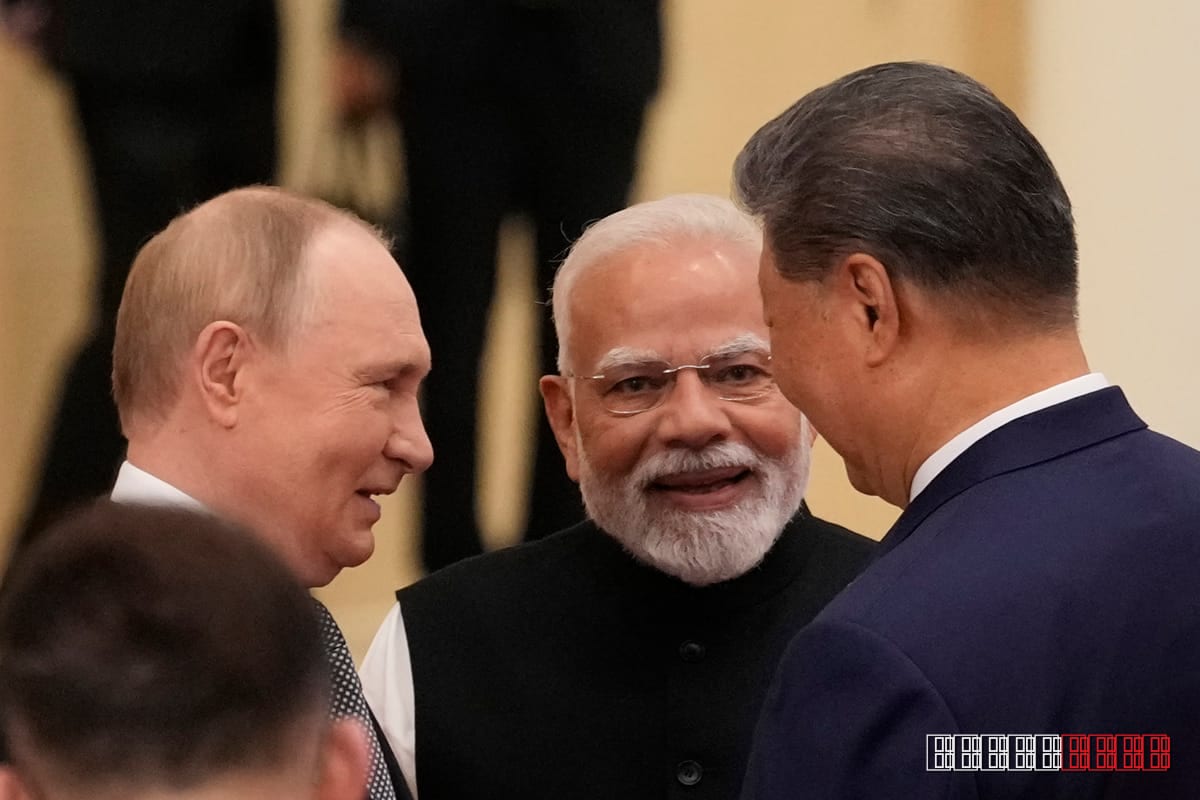
The latest BRICS summit opened in New Delhi with Chinese President Xi Jinping, Russian President Vladimir Putin and Indian Prime Minister Narendra Modi seated together, signalling a rare convergence of the three largest economies in the grouping. CNBC reported that the three heads of state used the venue to discuss how to deepen economic ties while the United States pursues an "America‑first" agenda that includes high tariffs and renewed sanctions.
During the three‑day meeting, officials from the member countries exchanged views on trade barriers, currency cooperation and joint infrastructure projects. The agenda, according to CNBC, also touched on security concerns stemming from the ongoing war in Iran, which has heightened geopolitical friction and complicated supply‑chain routes for energy and commodities.
U.S. policy under President Donald Trump has intensified pressure on global markets through steep tariffs on steel and aluminium, expanded export controls on advanced technology, and a hardening stance toward Tehran. CNBC noted that these measures are forcing BRICS nations to assess whether they can present a united front that offsets the economic shockwaves emanating from Washington.
BRICS, originally formed in 2010 by Brazil, Russia, India, China and South Africa, has grown into a platform for emerging economies to coordinate on monetary policy, develop alternative financing mechanisms and challenge the dominance of Western financial institutions. The bloc's recent expansion to include additional members such as Saudi Arabia and Argentina reflects a strategic push to broaden its influence. Historically, BRICS summits have produced joint statements on trade liberalisation, but the current U.S. approach tests the group's ability to move beyond rhetoric toward concrete economic collaboration.
Analysts say the New Delhi summit could pave the way for a new multilateral development bank or a coordinated response to sanctions that target technology transfers. However, divergent national interests—particularly between China’s export‑driven growth model and Russia’s reliance on energy revenues—may limit how far the bloc can align. The outcome will likely shape not only regional trade patterns but also the broader balance of power in a world where American protectionism is resurging.
Observers from think tanks and multinational firms will be watching the final communique closely, looking for signals of a more cohesive BRICS strategy that could offer alternatives to businesses seeking to navigate the increasingly fragmented global trade environment.
This report is based on original reporting by CNBC. Read the original source →