US ambassador watches Indian Army firing drill, highlighting joint readiness
The demonstration underscored growing interoperability between the United States and India’s armed forces.
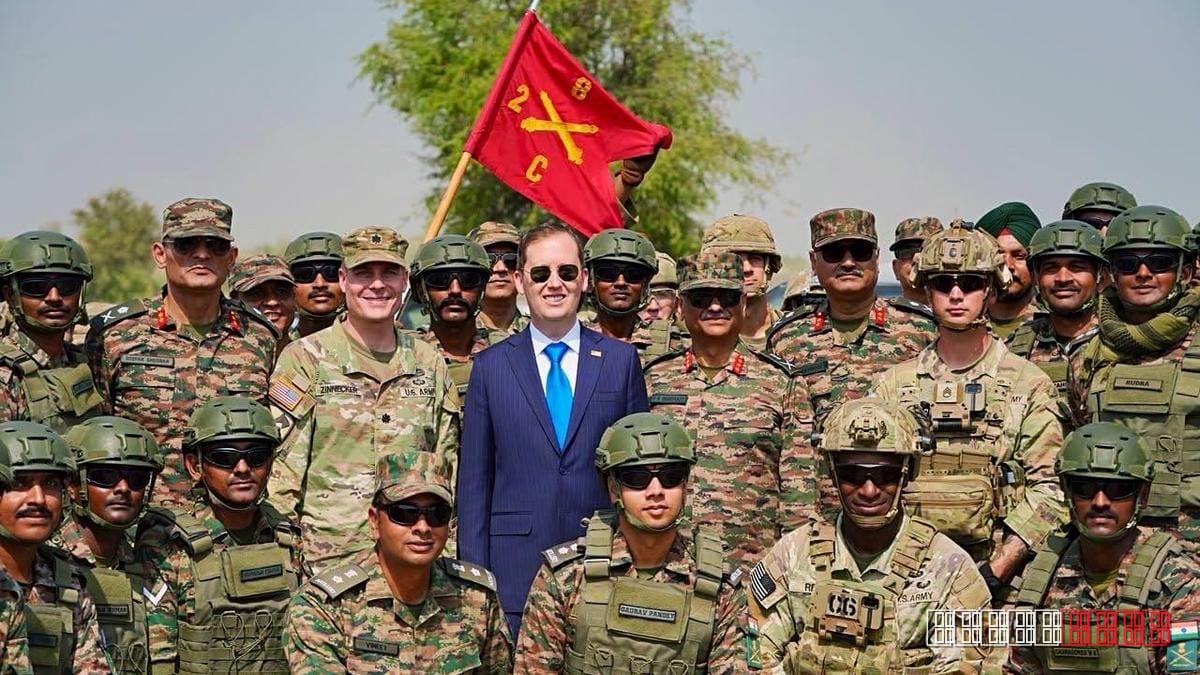
New Delhi – A live‑fire exercise conducted by the Indian Army on Saturday was attended by U.S. Ambassador to India and senior Indian military officials, showcasing the two nations’ expanding defence partnership. The Indian Army said the training reflected the ability of the armies to plan, coordinate, and execute complex activities together, while enhancing interoperability and mutual confidence (The Hindu).
The ceremony featured a series of artillery and small‑arms firing sequences, with the ambassador observing from a designated stand. Indian Army commander Lieutenant General Manoj Pande, who leads the Western Command, briefed the delegation on the tactical objectives and safety protocols before the demonstration began. The ambassador praised the professionalism of the troops and reiterated Washington’s commitment to deepening security ties.
This event follows a series of joint initiatives that have accelerated since the 2020 signing of the U.S.–India Basic Exchange and Cooperation Agreement (BECA). Regular exercises such as “Yudh Abhyas,” a bilateral training program for junior officers, and the maritime “Malabar” drills have built a foundation for combined operations. The firing demonstration adds a new dimension by focusing on land‑based coordination, a sector that both countries have identified as critical for countering regional threats.
Analysts note that increased interoperability is a strategic response to China’s growing military footprint in the Indo‑Pacific. By aligning command structures and sharing tactical knowledge, the United States and India aim to present a unified deterrent posture. The joint training also serves as a confidence‑building measure, allowing each side to assess the other's capabilities in a controlled environment.
While the demonstration was largely symbolic, it provides practical benefits. Soldiers from both nations can exchange best practices on target acquisition, fire‑control systems, and logistics support. Such exchanges are expected to streamline future joint operations, whether in humanitarian assistance, disaster relief, or combat scenarios.
The Indian Army’s public statement emphasized that the drill not only tested technical proficiency but also reinforced the “mutual confidence” that underpins the broader strategic partnership, a sentiment echoed by the ambassador’s remarks on the importance of sustained collaboration (The Hindu).
This report is based on original reporting by The Hindu. Read the original source →