Qatar's prime minister cautions against new Middle East escalation cycle
At the UN General Assembly, Sheikh Mohammed bin Abdulrahman Al Thani warned that the US‑Israel conflict's impact on Iran could trigger a seismic shift in regional stability and unveiled a new direction for Qatar's investments.
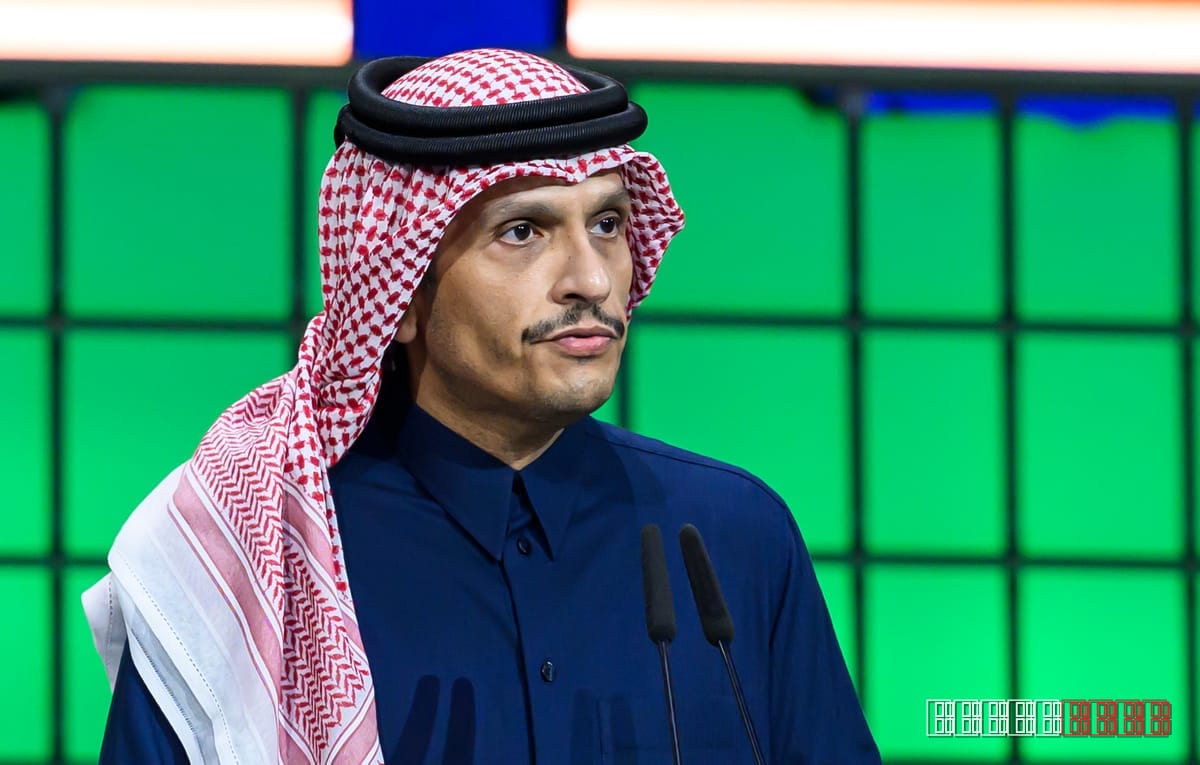
Sheikh Mohammed bin Abdulrahman Al Thani, Qatar’s prime minister, used his address to the United Nations General Assembly to describe the repercussions of the ongoing US‑Israel war on Iran as an "earthquake" that could reshape the geopolitical landscape of the Middle East. Citing the rapid escalation of hostilities, he warned that a repeat of such cycles would only deepen mistrust among regional actors and threaten global security, Al Jazeera reported.
The prime minister emphasized that the conflict’s spill‑over effects are already being felt in Tehran, where heightened tensions have led to increased military readiness and diplomatic posturing. He urged all parties to pursue restraint and dialogue, arguing that unchecked escalation would undermine years of diplomatic progress on issues ranging from nuclear negotiations to trade corridors.
In a parallel announcement, Sheikh Mohammed signaled a strategic pivot in Qatar’s foreign investment policy. The country will prioritize sectors that bolster economic resilience and reduce exposure to geopolitical shocks, shifting away from high‑risk assets in conflict‑prone areas. This move, according to Al Jazeera, reflects Qatar’s broader effort to diversify its portfolio beyond energy and real‑estate projects that have traditionally dominated its overseas holdings.
Background: The Middle East has long been a tinderbox of competing interests, with the US‑Israel alliance often at the center of regional flashpoints. Recent months have seen a surge in hostilities after a series of incidents in Gaza and the West Bank, prompting the United States to increase its military support for Israel. Iran, which views Israeli actions as existential threats, has responded with heightened rhetoric and proxy activities across the region. Qatar, a small but influential Gulf state, has positioned itself as a mediator in past crises, hosting talks between warring factions and providing humanitarian aid. Its economic clout, fueled by vast natural‑gas reserves, allows it to play a outsized diplomatic role, but also makes it vulnerable to market volatility tied to regional stability.
By warning against a “cycle of escalation,” Sheikh Mohammed is reiterating Qatar’s long‑standing policy of promoting dialogue over confrontation. The investment shift signals a pragmatic response to the uncertainty that war creates for global markets, aiming to safeguard the nation’s wealth while continuing to support peace‑building initiatives.
The speech concluded with a call for the international community to uphold the principles of the UN Charter, emphasizing that collective security can only be achieved through cooperation, not coercion.
This report is based on original reporting by Al Jazeera. Read the original source →