U.S. Investment Strategist Bessent Discusses Trade and Tech with China’s He Lifeng Before Trump‑Xi Meeting
Scott Bessent and Vice Premier He Lifeng met to cover trade, artificial intelligence and critical minerals as the Trump‑Xi summit approaches.
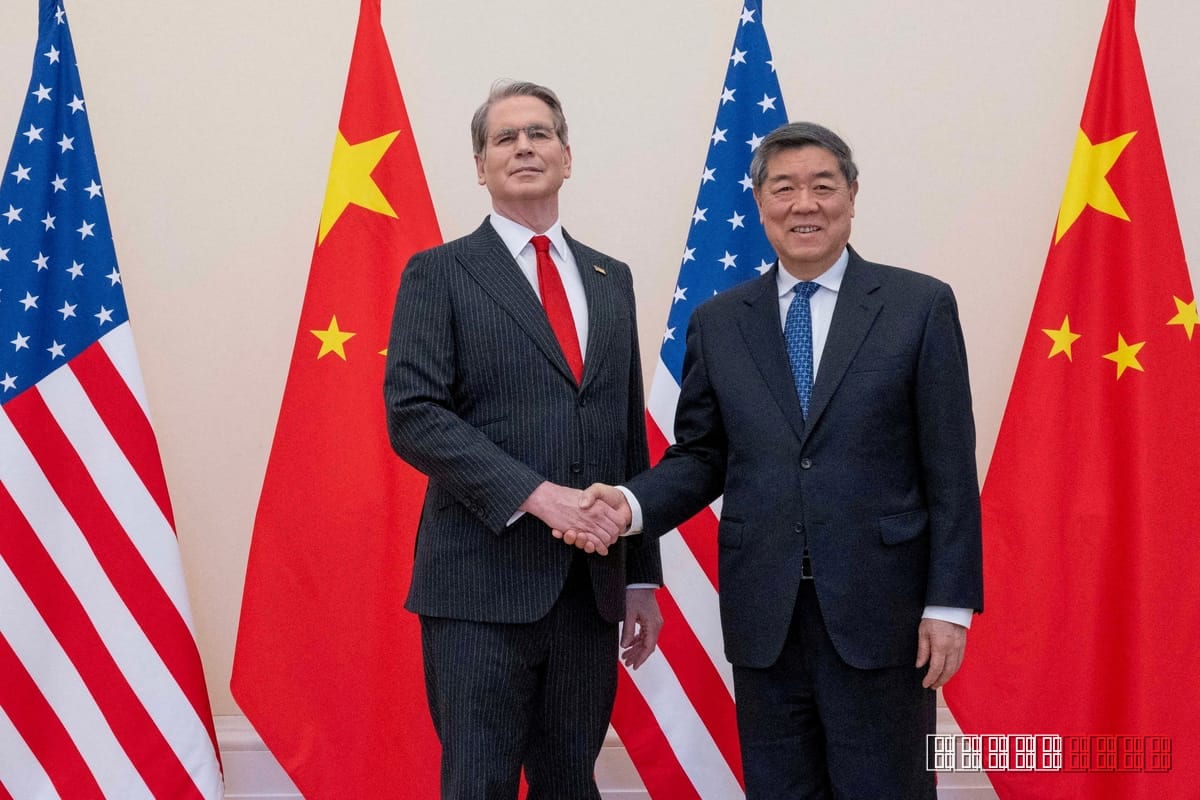
Scott Bessent, chief investment officer at a major U.S. asset‑management firm, sat down with China’s Vice Premier He Lifeng this week to exchange views on trade policy, artificial‑intelligence cooperation and the supply chain for critical minerals. CNBC reported that the two officials focused on how to reduce friction in the bilateral trade relationship while exploring joint opportunities in emerging technologies.
The dialogue comes just days before President Donald Trump is scheduled to meet Chinese President Xi Jinping on September 24. Both sides have signaled a desire to reset tensions that have lingered since the 2018‑19 trade war, and the Bessent‑He meeting is viewed as a private‑sector complement to the official diplomatic track.
According to CNBC, Bessent emphasized the importance of stable market access for U.S. investors and urged Chinese authorities to maintain transparent rules for foreign firms operating in the country. He Lifeng, in turn, highlighted China’s push to become a global leader in AI and its need for reliable sources of rare‑earth elements, which are essential for next‑generation chips and clean‑energy technologies.
Why the meeting matters: The United States and China account for roughly 40 % of global GDP, and their economic policies reverberate through supply chains worldwide. Since the last presidential summit in 2022, both nations have imposed tariffs and export controls that have disrupted semiconductor and battery markets. Business leaders like Bessent often serve as informal conduits, offering policymakers real‑time feedback from the investment community. Their input can shape the tone of high‑level talks, especially on contentious issues such as technology transfer restrictions and mineral export quotas.
Analysts expect the Trump‑Xi summit to focus on three pillars: trade balance, technology cooperation, and geopolitical stability in the Indo‑Pacific. If the private‑sector discussions held by Bessent and He translate into concrete proposals, they could help narrow the policy gap that has widened since 2020. Observers will watch for any language in the summit communiqué that references “fair competition” in AI or “secure supply chains” for critical minerals, both topics raised in the recent meeting.
The outcome of the summit will likely influence market sentiment across sectors ranging from semiconductor manufacturing to renewable‑energy projects. Investors are already adjusting portfolios in anticipation of possible tariff roll‑backs or new joint‑venture frameworks that could emerge from the talks.
This report is based on original reporting by CNBC. Read the original source →